Linear Ticket State as the Full Lifecycle Contract for an Agent VM
Linear tickets can provision, monitor, and tear down agent VMs as their unified control surface.
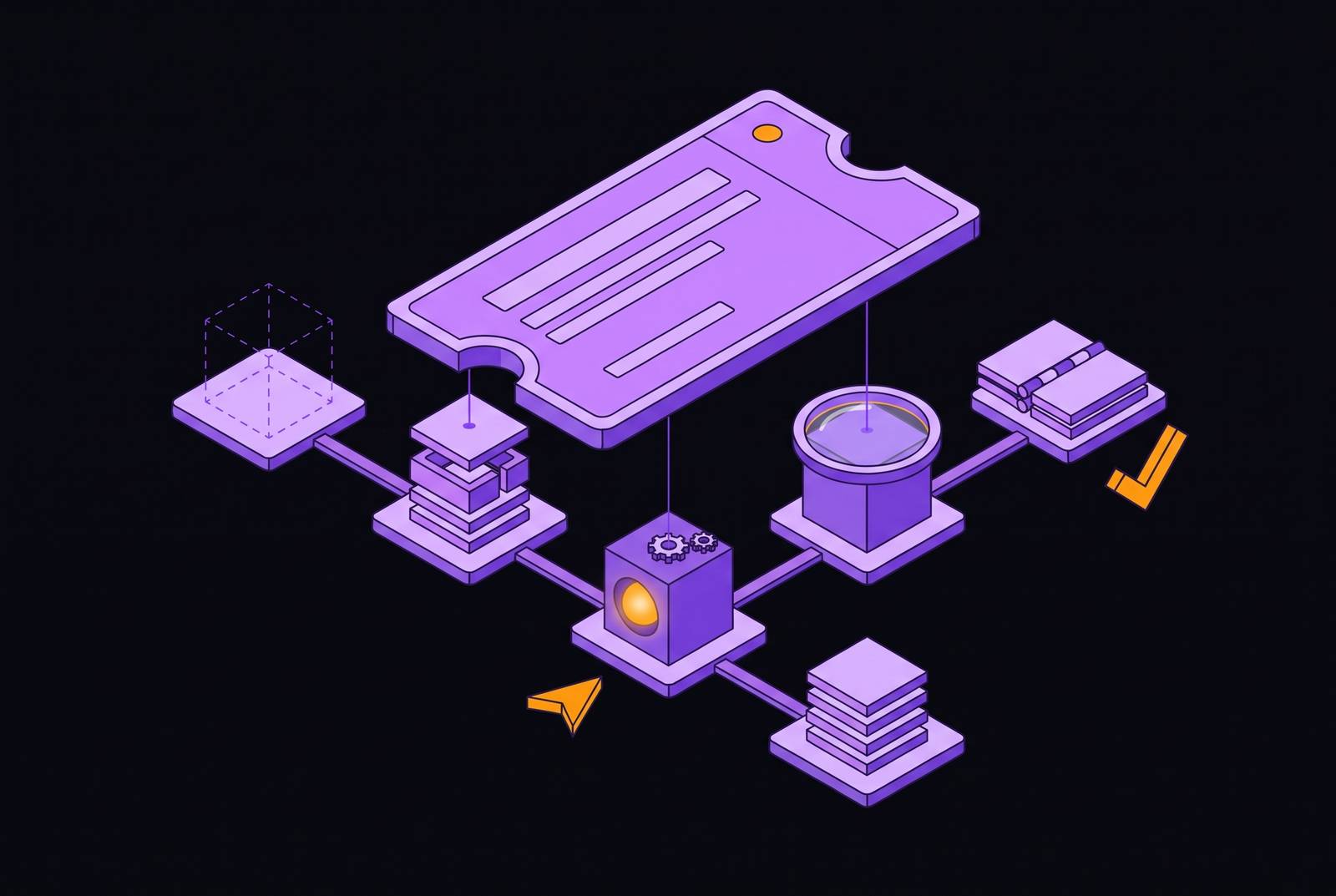
Linear’s cloud coding sessions offer a multi-harness cloud coding agent platform using Claude Code and Codex, with requests initiated from issues, comments, chat, or Slack threads and returned as pull requests. Ticket state should control how work runs as well as record it. A well-formed Linear ticket can become the lifecycle contract that provisions an agent VM, preserves its working context, supports review, and signals teardown.
Why a Linear ticket is the right primitive for controlling an agent VM's full lifecycle
A cloud coding agent can receive a prompt and produce a pull request while the work tracker remains untouched. In that arrangement, execution and coordination follow separate tracks. Engineers transcribe progress, decide when environments should start or stop, and reconstruct context between stages. The agent automates code production but leaves operational handoffs manual. That gap becomes harder to manage when several agents are working at once.
Linear already has the signals needed to connect those tracks, including issue states, assignees, comments, linked references, and automation hooks. Its ticket can serve both people and machines. Linear’s June 2026 coding sessions launch demonstrates the provisioning side of this design, with issue assignment launching a cloud session grounded in workspace context and returning a diff for review. The opportunity extends beyond that initial trigger. When subsequent state changes also govern execution, review, and release of the VM, the tracker becomes the control surface rather than a second record that engineers must maintain.
What the ticket contract must carry to function as a machine-readable spec
To establish that contract, engineers should design tickets around three responsibilities, which are context in, status back, and ownership. Supply the issue title, description, comments, and linked references without replacing them with a paraphrase. Precision is part of the input contract. Every ticket should contain Goal, Why, and Outcomes sections, defining the target state, the underlying need, and verifiable completion criteria respectively. This structure leaves the agent free to choose an implementation while keeping the definition of completion under human control.
The return path needs equal attention because a complete specification cannot compensate for stale status. Work starting, progressing, and becoming a pull request should appear on the issue without human transcription. Ownership must remain explicit throughout those changes. The human teammate remains accountable for the output even when execution is delegated to an agent. Treating delegation as a transfer of responsibility would make the tracker less useful to everyone outside the session.
An optional Implementation approach section can supply guidance without substituting instructions for outcomes. Verifications can then identify automated, manual, and visual checks. An agent prevented from closing a ticket until its checklist is complete cannot silently redefine success. The resulting ticket specifies both the intended change and the evidence needed to accept it.
How Linear's state machine maps to VM lifecycle events
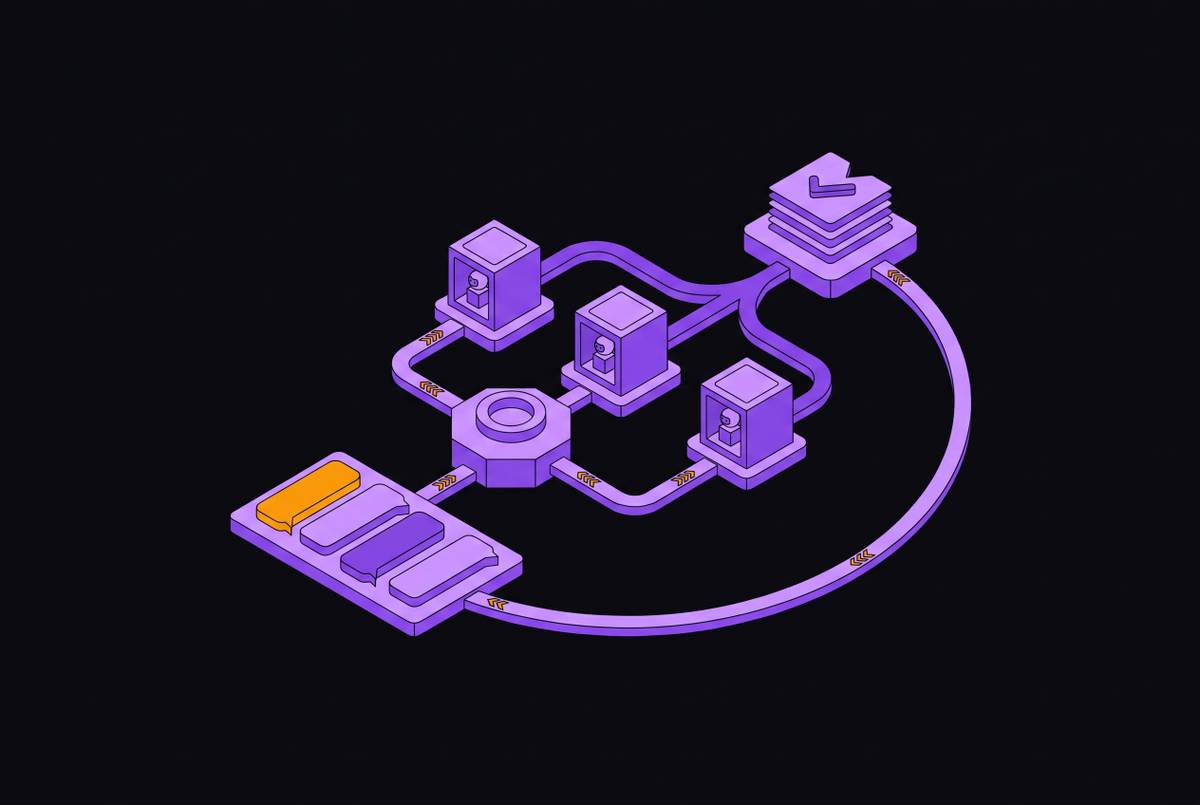
The lifecycle can be pictured as a linear flow from Todo → In Progress → In Review → Done, with Blocked branching from both In Progress and In Review. This is a designed workflow. Linear’s default workflow does not include In Review. The review state provides the explicit pause needed between producing a change and accepting it, while Blocked provides an escalation route.
The Todo → In Progress transition provisions and activates execution when assignment or a triage rule delegates the issue to an agent. The VM starts, dependencies load, and the session receives the full ticket payload. The agent gets workspace-level and team-level guidance before it reads the ticket. Linear exposes that guidance through Settings → Agents → Additional guidance and the corresponding team settings. During execution, progress returns to the issue’s activity so that state remains connected to work inside the VM.
Continuity requires more than leaving the VM running. A SQLite mapping of (issueId, continuityType, provider) to a session ID lets planning, implementation, code review, and PR creation resume the same session. The contract should also pin the working directory per issue. Claude Code’s continue resolves the most recent session in the current working directory, so changing directories can select a different session. Explicit resume by session ID supports cross-project search in v2.1.223+, but that does not remove the directory dependency from continue.
PR creation moves the ticket into In Review, where the VM persists while the agent is idle. The review artifact is the diff. Deterministic thread routing directs follow-up messages to the same agent, allowing feedback to produce further iterations. After merge, Linear’s GitHub and GitLab integrations can close the issue when a closing magic word or configured workflow automation applies, making Done the teardown signal. If the agent cannot complete the ticket, it should mark it Blocked and raise a formal escalation for human help.
Structuring the ticket hierarchy so agents can run concurrent workstreams without collision
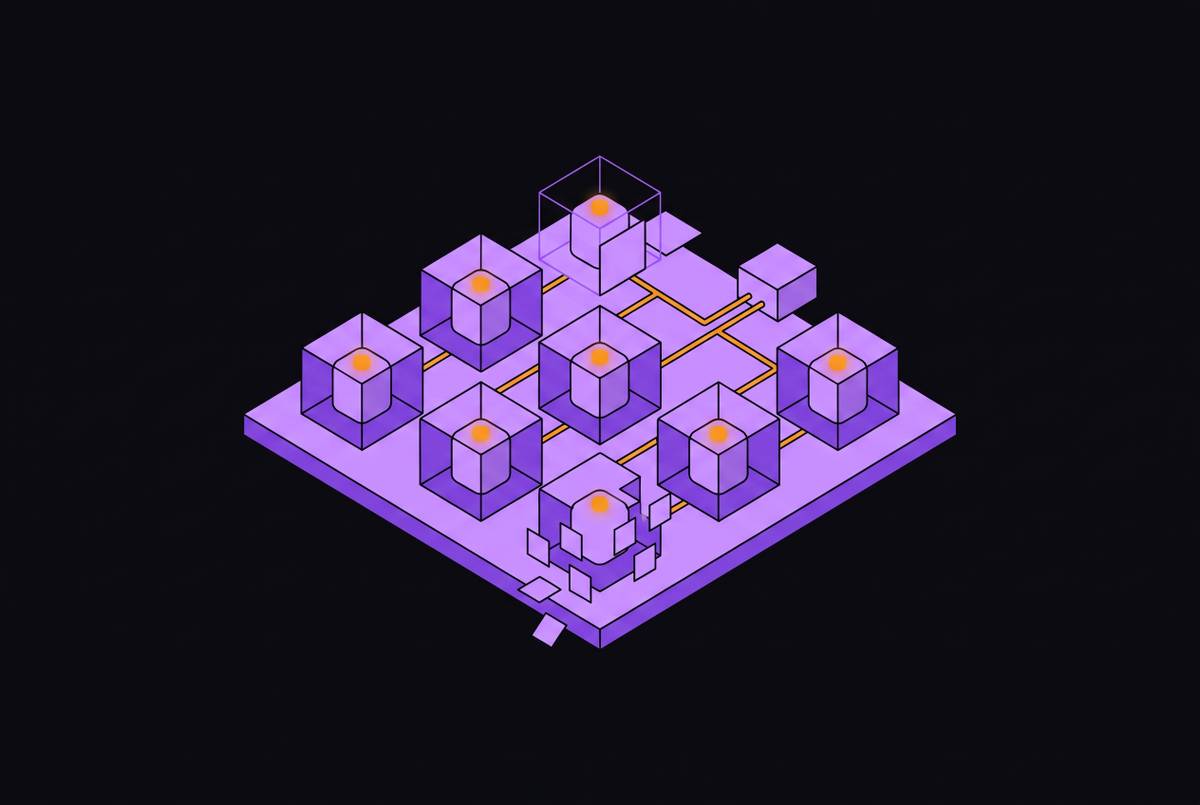
Agents in multiple isolated VMs can change the same files, causing collisions that lead to merge conflicts with no speed benefit. The ticket hierarchy must therefore group related issues for reporting and define which work can proceed concurrently. A tree of epics, tasks, and subtasks decomposes work into units that agents can complete while progress rolls toward the root.
In this pattern, agents work across a small number of concurrent workstreams, typically three to five, each scoped to a non-overlapping code area. An LLM workflow can determine assignments, but the ticket tree makes their separation enforceable. Concurrency follows the decomposition of the work. Without that structure, more agents do more work, but whether their changes can coexist stays unclear.
Incoming issues wait until the current batch completes rather than immediately spawning agents and interrupting work already underway. Triage rules on Business and Enterprise plans can auto-delegate incoming issues without a person stepping in. Linear uses this internally to resolve roughly 30% of incoming bug reports, mostly on the first pass. For that automation to work, intake, assignment, and active work must stay separate within the lifecycle.
How can engineers trigger Claude Code or Codex from Slack, and who controls the VM?
The integration route determines where the agent runs, whether execution survives laptop closure, and whether teammates can observe the session. A local agent with manual status updates receives the issue as a one-shot handoff, leaving subsequent comments outside its context and the PR link for the engineer to post. The contract remains advisory because the workflow cannot govern execution through the ticket alone.
MCP integration makes the tracker easier to access but does not on its own run agents in the cloud. The connection lives in the agent CLI’s configuration and composes with different harnesses, including Claude Code and Codex. The agent can update the tracker when instructed. MCP alone says nothing about session survival after laptop closure or how another teammate observes the work. Tracker access and VM orchestration are separate capabilities.
Linear’s native coding sessions run in the cloud. Engineers can request changes through an issue, chat, comment, or Slack thread, and the agent works toward a pull request without local environment setup. Teammates can review the diff and continue the discussion in the same thread. Workspace admins select the model for coding sessions, while usage draws from prepaid workspace-level AI credits at provider rates without markup, plus sandbox runtime. Human accountability remains intact despite delegated execution.
Custom orchestration offers more control by wrapping Claude Code or Codex as child processes, reading tickets through the API, and writing lifecycle status back. It also exposes provider-specific authentication, streaming formats, and session management. Teams taking this route should introduce an AgentRunner interface early, with separate argument builders and output parsers behind it. Output extraction needs its own fallback chain because MCP tools can sometimes be unavailable. The practical sequence is structured MCP calls first, text parsing second, and accumulated pre-result output last.
The VM environment is as important as the ticket state that triggers it
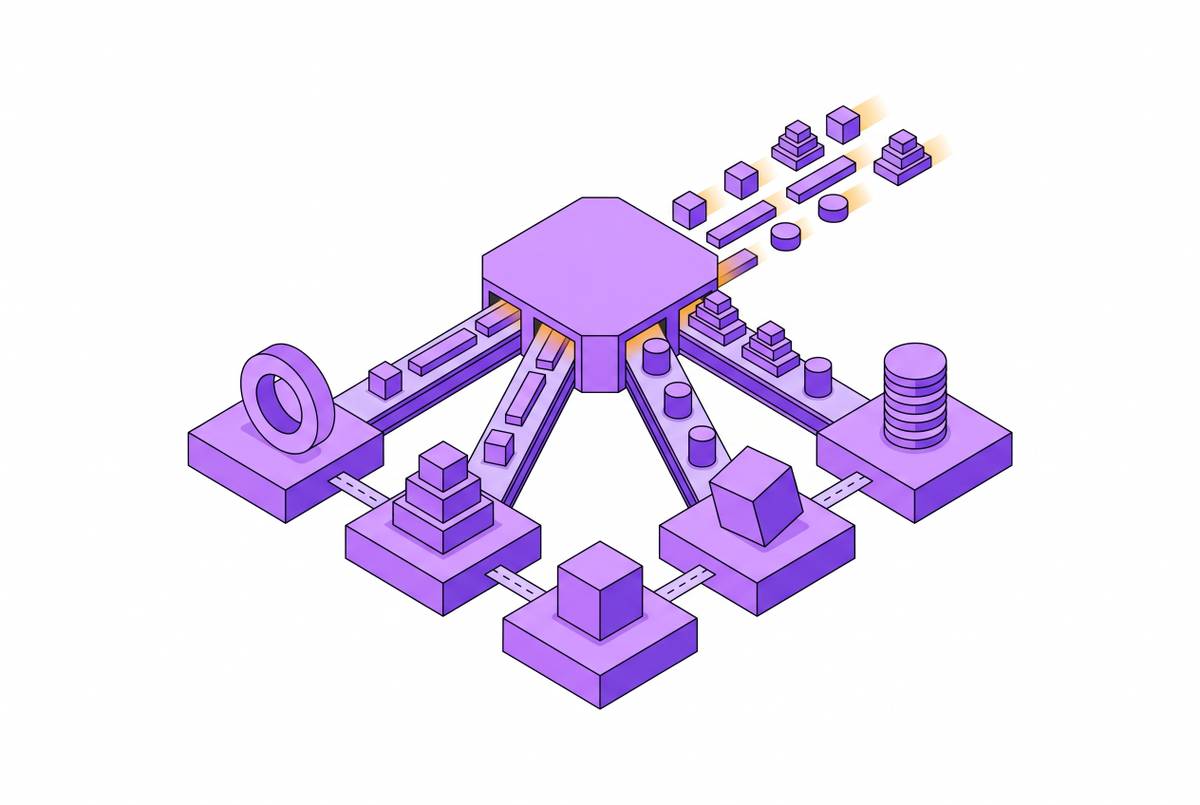
Engineers should require a per-VM isolation boundary for concurrent agent execution rather than relying on separate processes on a shared host. File writes, package installations, and running services can otherwise corrupt another agent’s workspace. The main approaches include microVMs, gVisor’s user-space kernel, and hardened containers. MicroVMs provide the strongest isolation through dedicated kernels per workload, with Firecracker using a minimal device surface and booting a dedicated Linux kernel in milliseconds.
The harness name does not establish that boundary. As of 2026, Claude Code’s Bubblewrap or Seatbelt sandboxing is opt-in and disabled by default, while Windsurf offers process-level isolation without a default sandbox. Cursor’s 2.x/3.x line includes a default agent sandbox, and OpenAI Codex CLI enables bubblewrap and seccomp by default. These controls differ from dedicated VM isolation. Teams should establish which boundary their chosen execution route actually supplies rather than infer it from support for a particular agent.
Within that boundary, operating-system controls should block network egress to places that are unknown, writes outside the active workspace, and all writes to agent configuration files or extensions. Secrets should pass through a proxy so sandbox code never gets raw API keys. An April 2026 advisory disclosed credentials readable from sandbox memory in one provider’s environment, with a patch on April 9 and a recommendation to rotate keys. The advisory underscores the need to address credential exposure while preserving isolation.
Environment preparation also affects useful execution time. Dependencies and tooling should be preloaded before the ticket transition fires. Cursor’s Builds, shipped August 13, 2026, demonstrates this approach with pre-configured environments. Failed builds stay inactive so agents can keep working while debugging goes on separately.
Managing context across a long-running ticket lifecycle without overflowing the agent's window
A persistent VM and session ID do not make the agent’s context window unlimited. Planning, implementation, self-review, and PR creation produce more intermediate state than conversation history can hold. Quality can degrade before the window fills. Passing the full message history between invocations will thus fail to keep context useful over time, even when each invocation is for the same issue.
Three channels can work together to keep useful state through online summarization without piling up messages. Structured working memory, using the Director’s Journal pattern, retains decisions and plans. A credibility-scored findings store, the Critic’s Review, filters low-plausibility observations. A chronological evidence record, the Critic’s Timeline, supports reasoning about prior work. File-based memory then offloads large intermediate results, including planning artifacts that would otherwise consume conversation space.
The ticket stays a fixed point of reference outside those channels. Its Goal, Why, Outcomes, Implementation approach, and Verifications sections give the agent something to reread at any stage instead of reconstructing intent from older messages. Session continuity serves a different purpose. It connects the implementation and self-review to the agent’s prior decisions, while the ticket supplies the acceptance criteria against which those decisions must be judged.
What to measure once the ticket is the lifecycle contract
When ticket state governs VM creation and teardown, the ticket becomes the natural unit of attribution. Each run can be connected to its source issue, harness, model, credentials, and time consumed. That attribution supports comparisons of which ticket types benefit from delegation, which harnesses complete reliably, and where human review effort concentrates. Code volume cannot answer those questions. Lines of code, commit counts, and story points stop separating useful delivery from generated activity, while cycle time, merge rate, and change failure rate remain tied to delivery flow.
Speed evidence requires a balanced measurement approach because controlled conditions have produced both faster completion and longer tasks with AI assistance. DORA’s 2025 data links AI to greater throughput but a higher change failure rate. Its 2024 report associated AI with decreases in both throughput and stability. Review quality therefore belongs beside merge rate. Agent PRs tend to grow in size, and rework concentrates in agent-written code, so faster production alone is not sufficient evidence of better delivery.
Blocked tickets expose a different kind of performance limit. Their rate, grouped by ticket type, harness, and model, helps identify whether failures arise from the specification, environment configuration, or agent guidance. The operational payoff of the lifecycle contract is that engineers can connect execution outcomes to the conditions that produced them and refine the contract at the point where it failed.