Cloud Coding Agent Platform Pricing Models Explained
Teams must account for model choice, compute runtime, and context consumption to compare true costs.
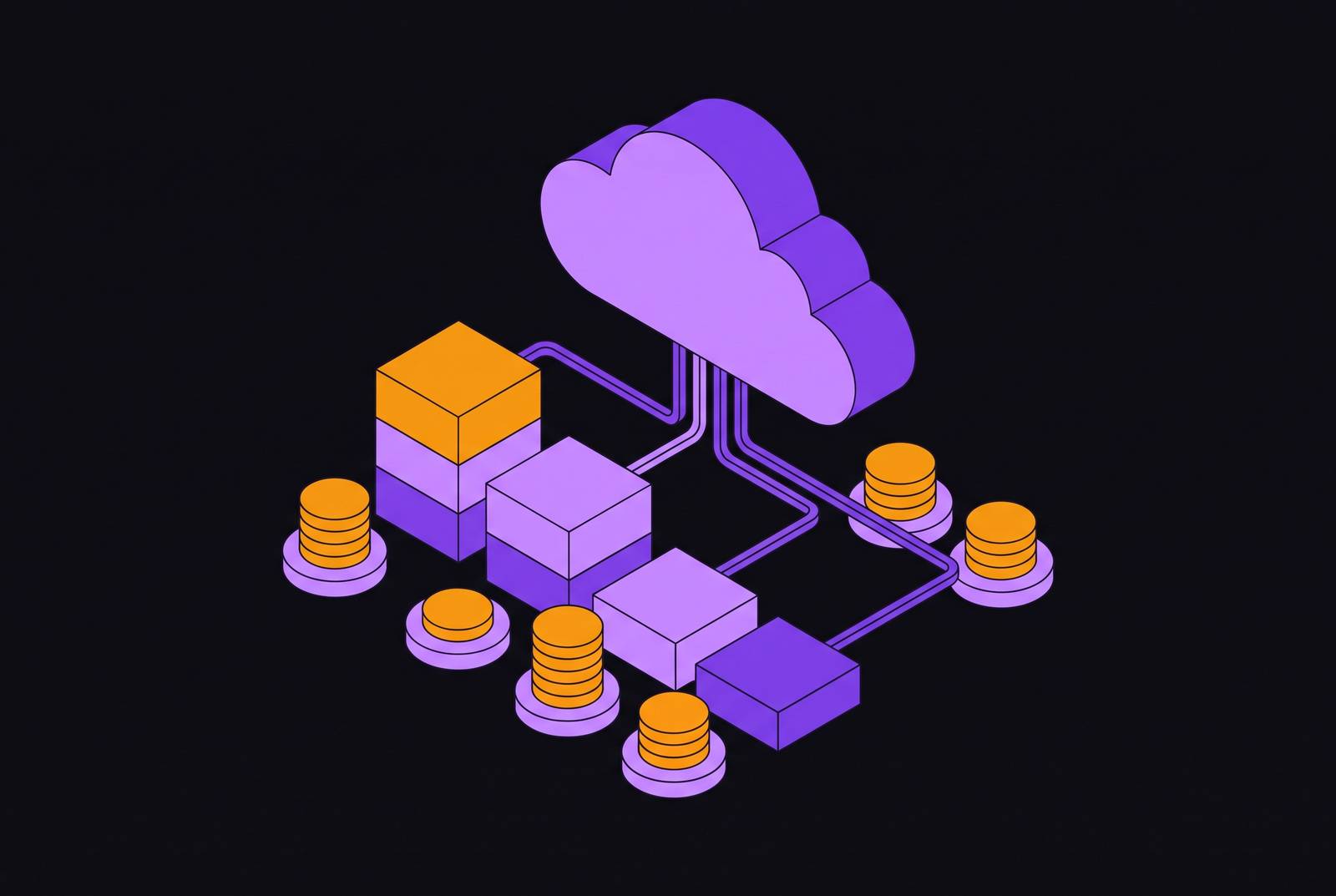
Cloud coding agent pricing combines subscriptions, model inference, compute time, and task or credit charges, so the best choice for an engineering team depends on its workload. A useful comparison measures the all-in cost of actual agent work. Model flexibility, billing during idle time, and per-run cost attribution are central buying criteria.
Why cloud coding agent pricing is hard to compare at face value
A published subscription price usually describes access to a tool. Model inference charges cover the tokens an agent consumes, while compute charges cover the environment in which it works. There may also be charges for each task or credit. These dimensions do not move in step. A modest subscription can therefore sit beneath a materially larger bill once a team starts running sustained background work.
Heavy use of Claude Code can cost many times the base plan price, while GitHub Copilot Enterprise needs a GitHub Enterprise Cloud subscription that brings its price above the listed seat charge. Similar sticker prices conceal different commitments. Two tools with roughly equivalent monthly subscriptions can produce all-in costs that differ by an order of magnitude.
The three billing philosophies that define the current market
A subscription with included usage gives a team a usage budget for a fixed price. Claude Code follows this approach, with Pro covering usage of one model and higher Max tiers supporting sustained use of stronger models. Light usage is relatively easy to budget. But as use grows, the model tier the team chooses has more effect on cost than how many tasks it completes. The subscription provides predictability only while the workload fits its allowance.
With token-based pricing, spending instead depends directly on how much the model consumes. OpenAI Codex moved to this structure on April 2, 2026, aligning with API rates. A long run against a large codebase can use up a credit budget much faster than several small tasks, even though the team gets fewer jobs done.
A third approach separates model consumption from environment runtime. Linear’s official AI Credits documentation states that coding sessions charge model tokens at provider-published rates without markup, plus sandbox runtime per 20-minute block. Forecasting requires both duration and token consumption. None of these philosophies is inherently better, because each places predictability around a different part of the workload. OpenCode sits outside the three as a free, permissively licensed tool whose own cost is the underlying model API the team chooses to call.
How the model you choose changes the bill more than the plan tier does
For platforms that pass through inference charges, the default model can outweigh the subscription tier as a purchasing decision. Available token rates vary by a factor of forty or more. The difference applies throughout a session. A long agentic run therefore has a substantially different cost depending on which model handles its input and output.
Claude Fable 5.1 became available in Claude Code on September 1, 2026, and costs $10 per million input tokens and $50 per million output tokens. GPT-6 Sol, released September 22, 2026, costs $2 and $10 respectively. GPT-6 Luna, released the same day, costs $0.10 and $0.50. Output tokens deserve particular attention in these comparisons. A single blended token price would obscure the different charges for what an agent reads and what it generates.
This range explains the economic case for staying harness-agnostic. A team locked to one provider’s model stack accepts that provider’s minimum cost even when a cheaper alternative matches the capability needed for a particular task type. Model flexibility creates room to match spending to work. It does not require treating every model as interchangeable, only recognizing that the strongest available model need not handle every job.
What the headline plan prices actually include for Claude Code, Codex, and Cursor
Claude Code’s individual tiers are Pro at $20 per month, Max 5x at $100, and Max 20x at $200. For heavy users, Max 20x is substantially cheaper than buying equivalent tokens through the raw API, which would cost many times that amount. The billing route changes the comparison materially. Applying API rates to a subscription workload without accounting for the plan would misrepresent its effective cost.
Codex’s token-based structure ties cost to consumption at API-aligned rates, requiring a different calculation from those fixed Claude Code tiers. GitHub Copilot adds a separate procurement concern. Its individual Pro plan is $10 per month, with Pro+ and Max at higher price points, but the enterprise budget must also account for the required GitHub Enterprise Cloud subscription. That prerequisite is one of the clearest ways a seat-only comparison understates the purchase.
Cursor’s plans, as of October 18, 2026, are Free at $0, Plus at $8 with Grok models only, Premium at $30, Super at $100, Ultra at $200, and Teams at $30 or more per user per month. Earlier tiers are designated legacy plans. Plans for businesses start at $30 per user per month, while Ultra is the most expensive individual tier and is for extremely heavy use. Auto mode changes the budget calculation further. It routes tasks to the best available model without counting against a credit pool, making costs more predictable for teams concerned about overage.
The compute layer that subscription prices leave out entirely
Background agents that run for hours in cloud VMs add an environment bill that comparisons based on subscriptions leave out. GitHub Codespaces provides a reference point, with a 4-vCPU, 16 GB machine incurring a meaningful hourly charge. Model consumption is only part of that workload. Tokens measure how much the agent reads and writes, whereas compute measures elapsed time, including waits for builds, tests, or external services.
A task waiting two hours for a test suite incurs two hours of compute regardless of how few tokens the model uses during that wait. Per-second billing and the ability to pause an environment therefore affect the bill enough to matter when comparing specifications.
Bring-your-own-cloud changes this calculation for teams with existing cloud commitments. Cloud prices the team negotiates or committed use discounts can lower what it pays for compute when it runs workloads through its own accounts. The entry cost can be substantial, however. Enterprise infrastructure platforms can impose a significant monthly minimum for BYOC, so the lower runtime rate must be considered together with that commitment.
How context window consumption drives inference costs in ways task counts do not predict
The largest hidden multiplier on inference cost is the amount of context consumed per turn. Platforms determine part of this load through what they include by default. An agent may get tool definitions, conversation history, and repository context before it starts doing useful work. Those inputs consume tokens on their own. Two tasks that look equivalent in a work queue can therefore produce very different inference bills.
MCP tool definitions illustrate the mechanism clearly. Loading a full tool manifest on every call consumes context whether or not the task needs every tool. Loading definitions lazily, based on task type, leaves more effective context for the task and can materially reduce inference cost without changing the model or plan tier. The architectural choice becomes a pricing variable. A rate card cannot reveal that difference because it specifies only the price of tokens, leaving the number the platform will supply unspecified.
Task-count forecasts miss this variation when they assume a roughly uniform token budget per job. Long histories and large repository contexts can make one task far more expensive than another at the same rate. Persistent memory can use compression to cut down on repeated context loading, so long-running work uses tokens more efficiently and produces better results. Teams therefore need to weigh context design both when they compare costs and when they assess what an agent can do.
Why the metrics most teams use to measure agent ROI undercount the true cost denominator
Seat-only accounting overstates return once inference, compute, and rework make license costs a minority of total agent spending. The problem compounds when PR throughput is the only measure of benefit. That calculation combines an artificially low cost denominator with a narrow view of output. More activity is not necessarily more value. A sound return calculation must account for what the work costs after generation.
Agent-generated code can incur higher defect rates that surface later as rework, allowing short-term throughput gains to mask longer-term quality costs. METR’s randomized trial of experienced open-source developers found that tasks took 19% longer when AI tools were allowed, even though developers believed afterwards that they had been faster. Perception and measured performance diverged in that trial. The finding makes independent measurement necessary without establishing that every team or workload will see the same result.
Tracking productivity more broadly shows sizable gains in median PR throughput, but they are far below the order-of-magnitude gains that vendors often claim in their marketing. Teams can still get good returns when they count the full costs of usage. High-performing teams sustaining high weekly active usage, high AI-assisted code share, and sub-eight-hour PR cycle times also maintain code turnover ratios that suggest quality is not degrading. Better accounting helps teams decide where to invest. It distinguishes useful adoption from activity that looks productive only because its costs remain outside the calculation.
Full attribution requires tracking spending to the source, harness, model, and credential for every minute an agent runs. A monthly invoice cannot supply that explanation. Without per-run attribution, a team cannot determine which tasks generate value and which consume budget on low-return work. The same total bill could cover very different mixes of tasks.
How to read a cloud coding agent pricing page before you commit to a model
The practical evaluation begins with five checks, starting with what the plan includes and what triggers additional charges. Code completions may be free while agent mode draws from a separate metered pool, and many plans cover neither inference nor compute for agentic runs. The listed seat price is not sufficient evidence. Required subscriptions, usage allowances, and overage rules belong in the same calculation before two platforms can be compared on equal terms.
The second check is the available model rate range and the freedom to route appropriate tasks to cheaper models. A platform locked to an expensive default can erase the benefit of a lower subscription. The third check is compute billing during idle or blocked time. Teams planning long background jobs should ask explicitly whether compute billing pauses when the agent is blocked, rather than treating pause support as proof that every wait is unbilled.
The fourth check is support for multiple agents and models. Significant releases between August and September 2026 illustrate how quickly the available cost choices can change. Platforms supporting Claude Code, Codex, Cursor, and OpenCode together allow teams to assign models by task type. The fifth check is per-run attribution. Reporting only monthly spending cannot identify which tasks, models, or integrations generate value, whereas attribution to source, harness, model, and credential supports an honest cost-per-task calculation.
Annual billing can reduce seat costs by fifteen to twenty percent across tools, but it is not the primary lever for heavy agentic workloads dominated by tokens and compute. That discount comes after understanding the usage model. The decisive comparison is whether a platform’s billing structure fits how the team runs agents, including context consumption, waiting time, and model choice.