When Parallel Agents Are Overkill for Engineering Teams
One well-configured agent beats multiple agents your team can't review fast enough.
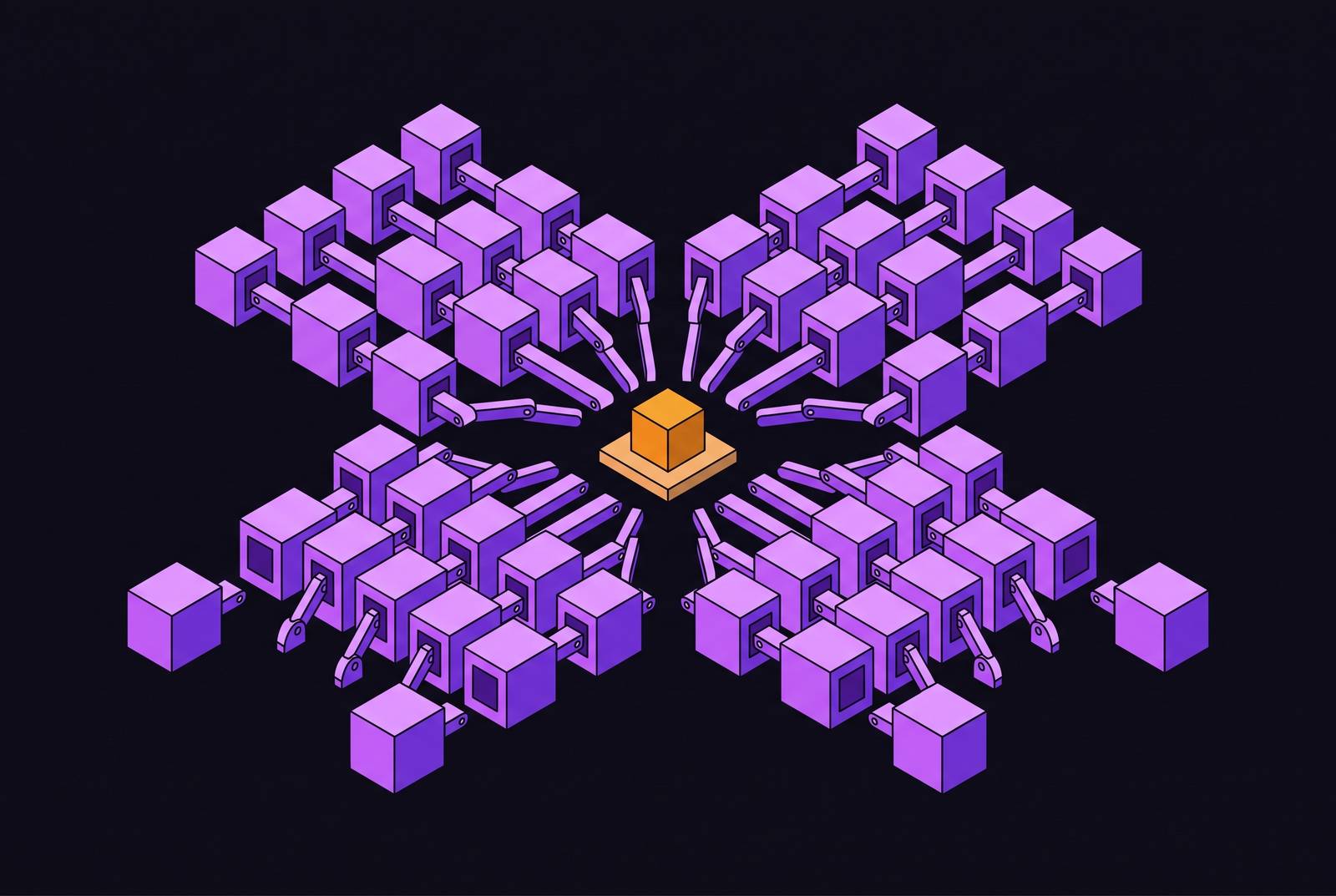
Parallel coding agents are overkill when they produce changes faster than engineers can review, integrate, and verify them. For most teams, one well-configured agent in an isolated environment is the better starting point. A second agent earns its overhead only when the tasks are independent, review capacity is already available, and the time saved exceeds the coordination cost.
Why parallel coding agents multiply output faster than engineers can absorb it
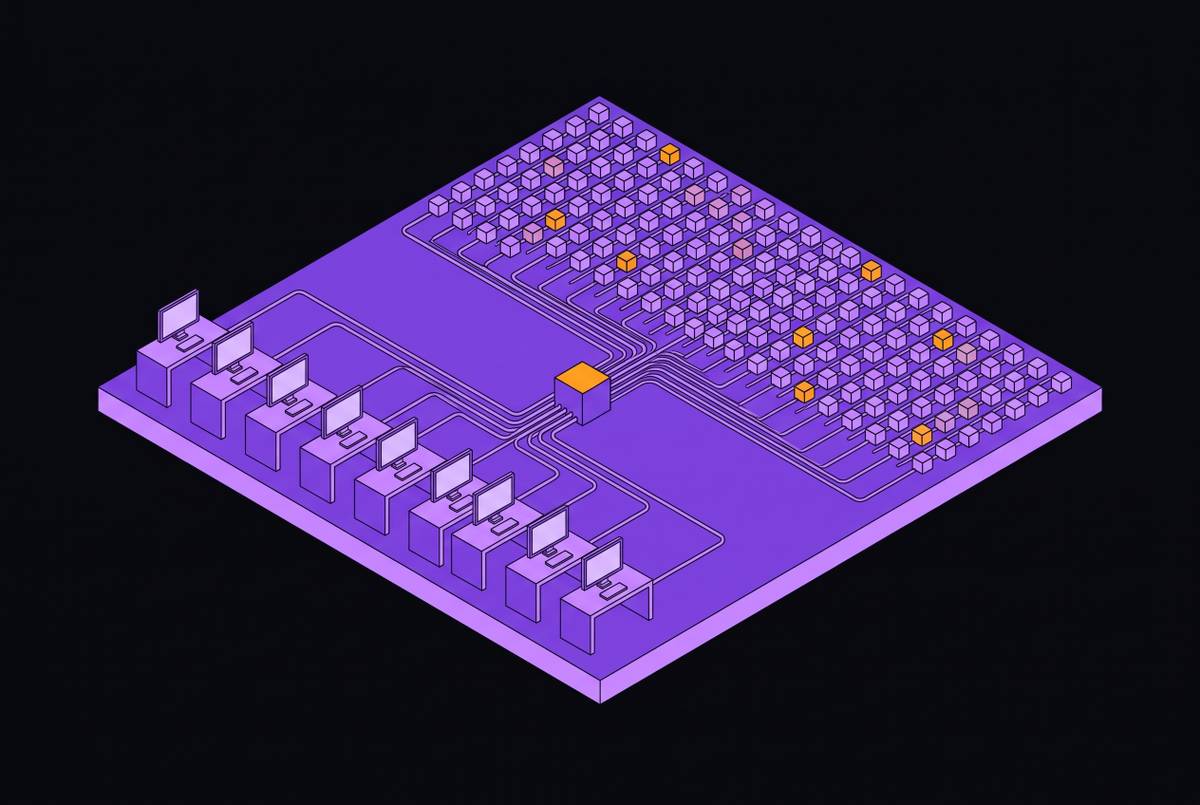
An engineer starts a fourth agent because the third is still working. The third followed the second for the same reason, with each new session filling time that would otherwise look idle. Starting another task is cheap, and the agents can generate code concurrently. But when their results return, the engineer must reconstruct what each was asked to do before deciding whether its output is ready to land. The work has multiplied without a matching increase in the attention available to judge it.
That creates two demands on the same person. The context-management demand is to hold four separate mental models, including each task’s scope, its current output, and its unresolved decisions. The verification demand is to inspect the changes. More concurrent output does not create more concurrent scrutiny. One engineer can still focus on reviewing and landing only one significant change at a time.
This reverses the logic behind single-track development, which minimized context switching because rebuilding a mental model took time. With parallel agents, that reconstruction becomes a routine part of the workflow. The generation step gets faster, but the engineer still has to understand each change in its own terms. As a result, apparent idle time during an agent run is not, by itself, evidence that another session will improve delivery.
Where the integration cost actually lands — merge and shared-module conflicts, not generation time
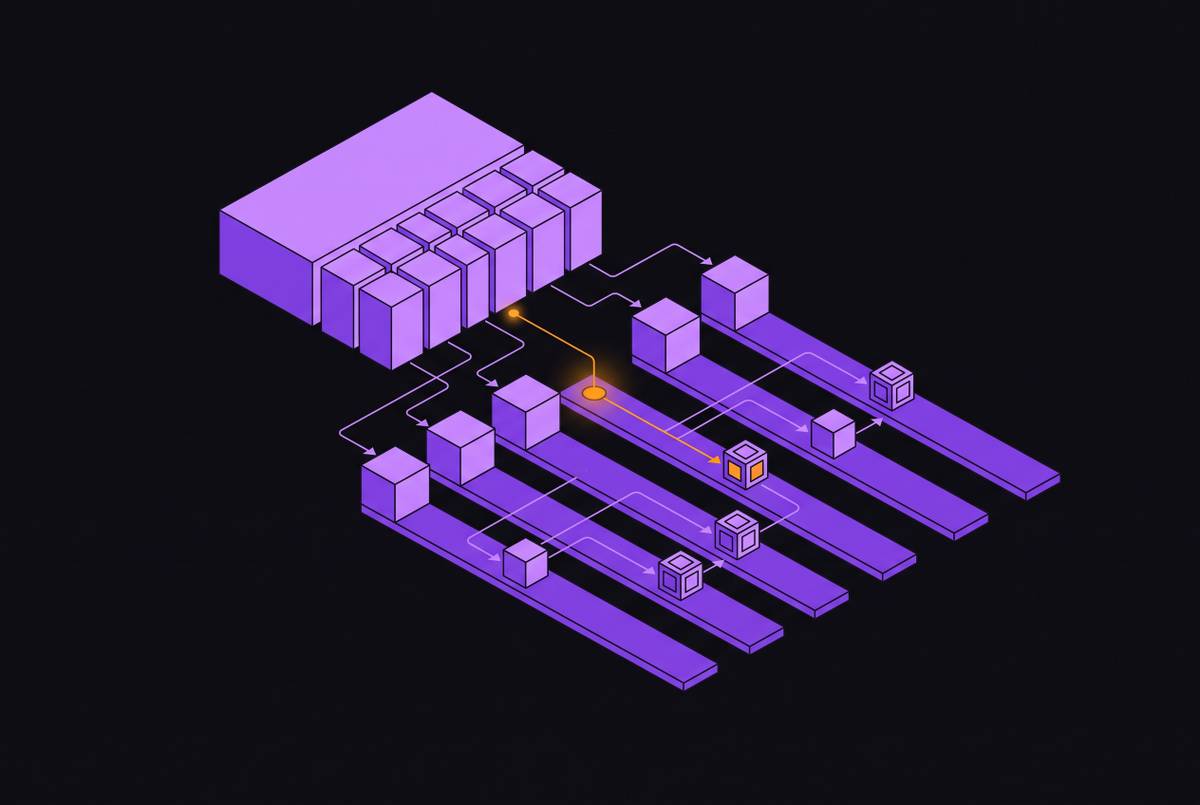
The sharpest cost appears when separate streams must become one coherent change to the codebase. Independent work with no shared state can run cheaply in parallel because each result can be judged on its own. Work that touches shared modules such as auth or billing is different. Each agent’s choices can affect whether the other agent’s choices remain valid.
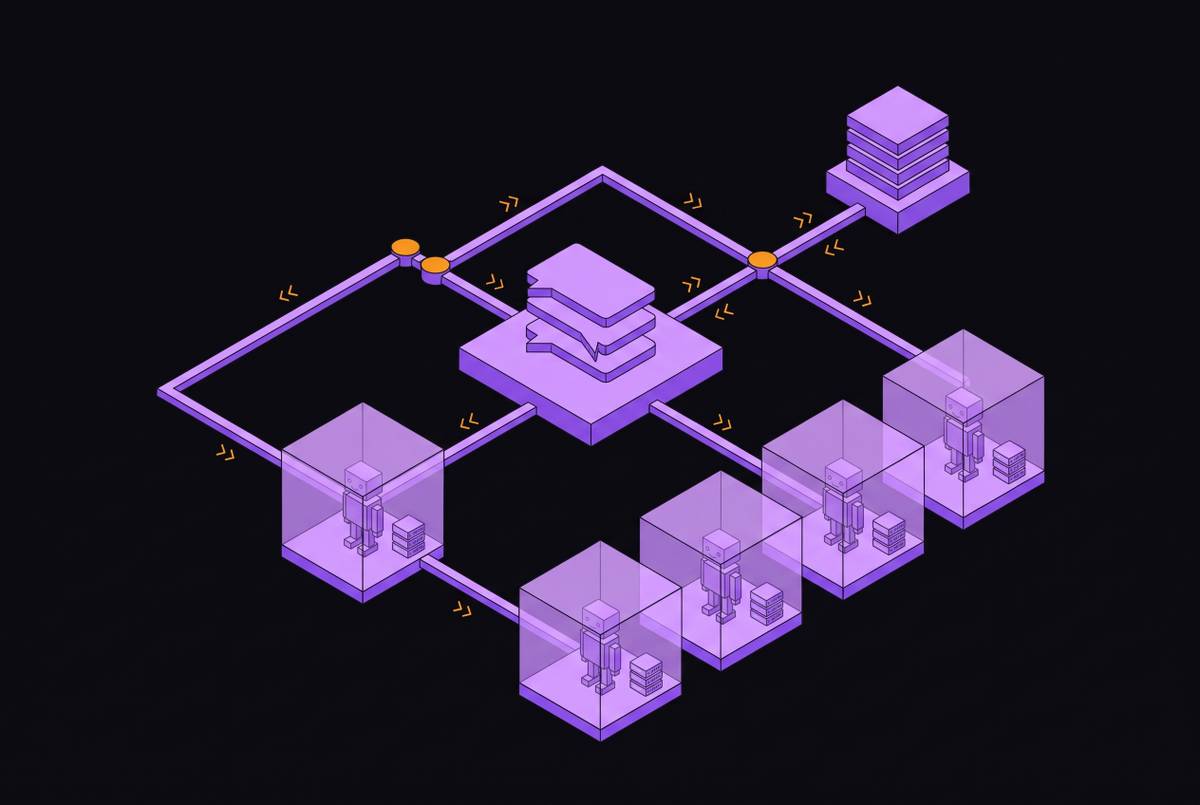
Without environment isolation, agents editing the same files can create conflicts that take longer to untangle than parallel execution saved. Isolated workspaces, including git worktrees, separate repository clones, or sandboxed containers, keep those streams apart until integration. Replicas runs each agent task in its own isolated Linux VM, with the team’s codebase cloned fresh and dependencies installed at runtime. That separation allows agents to work concurrently without file collisions. It does not establish that their changes belong together.
Two agents can each produce clean, passing code while taking contradictory approaches to a shared module. Sorting out that semantic conflict takes someone who understands both threads, even with a clean working directory. Faster agents cannot settle a conflict between the choices they made, whatever their execution speeds. For engineering leaders, the review queue therefore sets the practical limit on concurrency, and adding a fifth agent cannot accelerate a delivery step that is already waiting for human judgment.
How context rot inside long-running agents compounds the review problem
Integration assumes that each agent has continued to solve the task it was given. On long runs, that is less safe to assume as context degrades. Accuracy can fall well before the rated context window fills, sometimes from very early in context fill. A large nominal window is therefore not a guarantee that the agent still has a dependable grasp of the work.
Goal drift is the consequential failure mode for review. Over a long session, an agent can subtly reframe the original task and produce code that no longer solves the original problem. The output may still appear coherent, so the reviewer must inspect more than implementation quality. The reviewer must also compare the result with the original intent. Each additional stream adds this uncertainty as well as more code, and the verification cost grows with task length.
Context management can reduce that risk by compressing context before the window fills and re-injecting the original goal at intervals. Those measures require tooling support or deliberate harness configuration, and they do not eliminate drift. Teams using Replicas or another agent platform therefore need to judge runtime setup and context handling on their own terms. These needs still hold when work runs in parallel, and adding streams before meeting them makes it harder to know how much review work there will be.
What the Microsoft-scale rollout shows about the conditions that actually produced output gains
The early-2026 rollout study found a substantial lift in merged PRs from coding agent adoption. That is strong evidence that agents can help engineers get more work merged, beyond writing more code that stays unmerged. But an adoption result does not establish that running more agents concurrently is the source of the gain. The conditions around use, and the limits of the output measure, determine what engineering leaders can reasonably take from it.
First use spread through social networks. Engineers whose skip-level peers mostly used the tools were much more likely to try them. Adoption therefore followed existing trust relationships. A team cannot count on more agent capacity to bring about those same conditions. The rollout shows that how engineers encounter and adopt the tools matters to their use.
The output measure was merged pull requests per engineer per day. That counts work that reaches the repository, but leaves out some of the review effort, risk, and later rework. A merged PR can count as output while consuming more total team time than it saves. This is the central caveat for a review-constrained team evaluating parallel execution. If agent throughput doubles while review bandwidth remains fixed, the additional output accumulates in front of the step that did not get faster.
The specific conditions under which a second agent earns its overhead
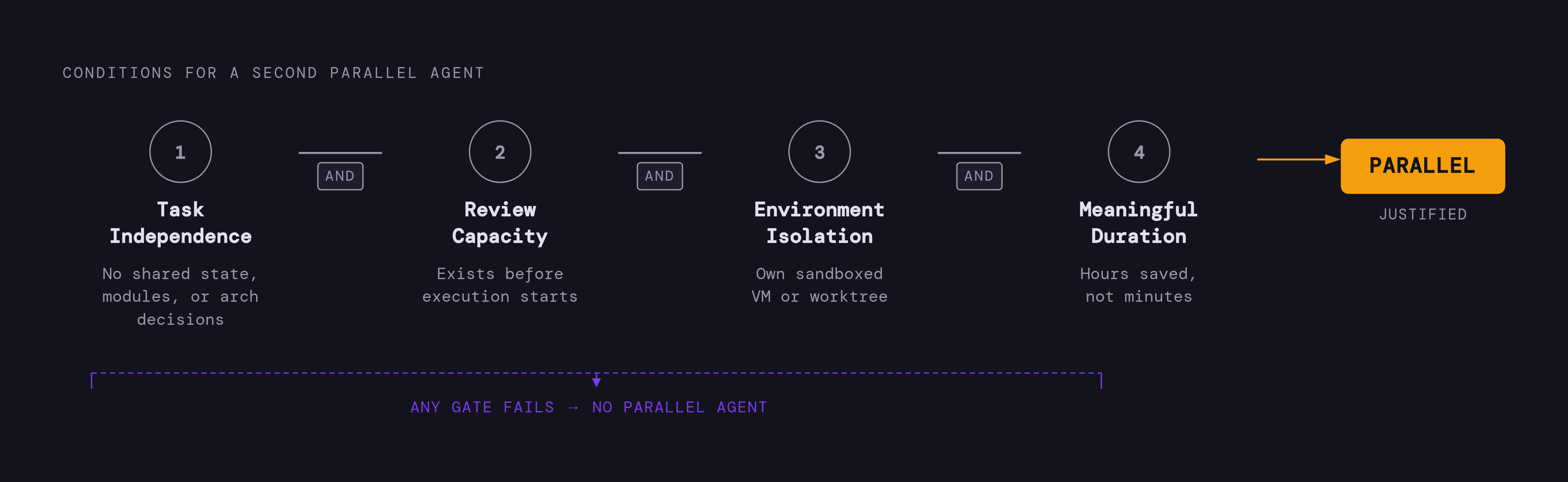
The first condition is genuine task independence. The work must have no shared state, modules that overlap, or architectural decisions that affect both streams. Rewriting auth and billing in parallel fails that test, while generating an independent test suite and updating documentation can pass it.
The second condition is review capacity that exists before execution starts. Someone must already have both the time and the context to evaluate two streams of output. A plan to find a reviewer after both agents finish does not satisfy this condition. The third condition is environment isolation, with each agent in its own sandboxed VM or worktree. That gives the reviewer separate, inspectable changes rather than work that agents may have corrupted through file collisions.
The fourth condition is that tasks take long enough for running them together to save a meaningful amount of wall-clock time. Two tasks that each take four minutes leave little time to make up for the work of managing separate streams. Two tasks that each take four hours on independent parts of the codebase make a stronger case. Even then, longer tasks bring a risk of context drift that the review must deal with. The decision therefore depends on all of these requirements holding together. Where they do not hold, context management, review load, and integration conflicts outweigh the gain from concurrent execution.
What a well-configured single agent can do that a parallel setup cannot match on coordination cost
A single agent in a proper isolated environment can do a lot of work without leaving someone to review several streams at once. A background agent can install packages, run services, drive a browser, and check its output in its sandboxed VM. For an individual task, those capabilities do not depend on another agent running at the same time. The quality of the runtime and harness configuration makes the relevant difference. Adding concurrency does not compensate for missing tools, incomplete context, or poorly defined scope.
A well-specified task gives the agent a clear outcome and gives the engineer a stable basis for review. With the right context and tools, and a scope bounded to avoid shared modules, the agent can produce a PR that receives one focused review pass. Sequential work can also retain structure rather than becoming an undifferentiated series of prompts. Treating each task as a labelled thread with its own branch, scope, and connection to an outcome preserves the context needed to judge it. This captures much of the benefit of delegated work without asking the engineer to keep several active implementations in mind.
The available options include Claude Code for long-context engineering, Codex for async parallel-safe refactors, and Cursor for in-editor iteration. Routing work to a suitable agent is more useful than running two instances of an unsuitable tool simultaneously. A harness-agnostic approach keeps that choice separate from the decision about concurrency. A team can change the agent that performs a task without also multiplying the number of results awaiting review.
For running agents in the cloud, Replicas provides an implementation of this isolated approach, running Claude Code, Codex, Cursor, or Opencode in separate Linux environments. Its single-agent path can install the team’s dependencies just as its parallel path can, so individual-task capability does not require concurrent runs. Its analytics attribute every minute of agent run time to the source, person, harness, model, the credential that paid for it, and the skills and MCP servers used. That makes execution measurable rather than leaving the team with only a count of completed PRs. With attribution for each task and data on its review, the team can judge whether another stream would help it deliver work.
How to decide — a practical framework for engineering leaders choosing between one agent and many
The useful decision is where another agent would add work that the team cannot process faster. Start with a single agent that is properly isolated and measured, then establish the review throughput that workflow can sustain. If review is already the constraint, another stream makes the queue longer.
If there is still time for more review, judge a specific second task. Confirm that it has no shared state or architectural overlap with the first task, allocate its reviewer in advance, and compare the wall-clock saving with the coordination cost. Track attribution at the task level, including the agent, harness, model, and engineer who reviewed the output. Without those connections, an increase in PR volume cannot establish that the second agent helped. The team needs to tell whether work finished faster or just moved into someone else’s queue.
Keep harness choice flexible so that the workflow can route tasks to the agent that fits them as better models ship. When human review is the limit, that flexibility remains useful even if tasks run sequentially. The sequence is isolation, measurement, and a working review cadence, followed by a second stream where the conditions support it.