How Engineering Teams Trigger Cloud Coding Agents From Slack Linear and GitHub
Where a cloud coding agent is triggered sets its context and controls.
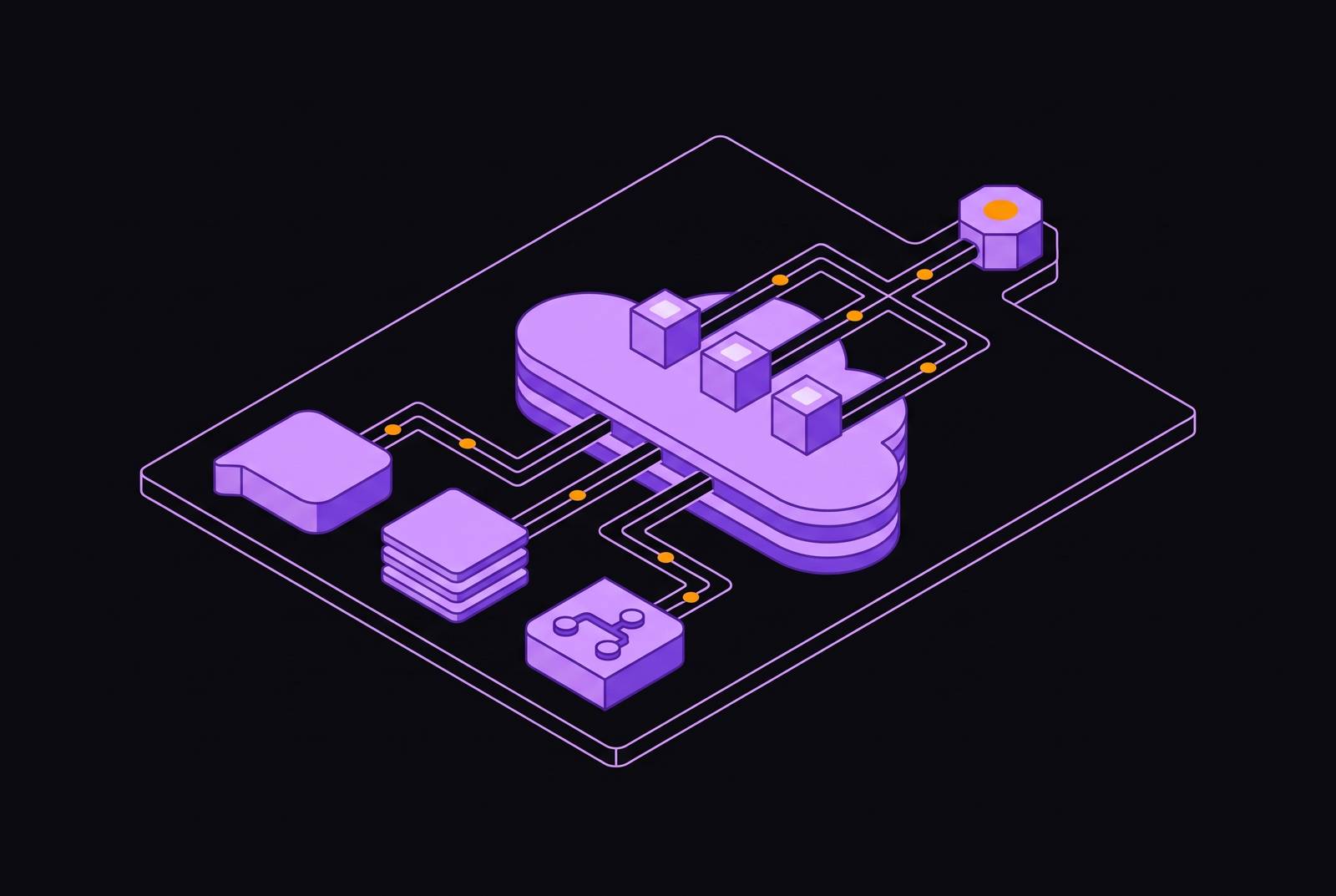
The best cloud coding agents for engineering teams match the trigger’s context, authorization boundaries, and expected output to a reliable execution environment. This article explains how Slack, Linear, GitHub, and unattended alerts shape that match. The decisive choice is not which tool makes an agent easiest to summon, but whether the resulting workflow can complete useful work under clear human control.
Why the trigger surface is a structural decision, not a convenience choice
It seems harmless to choose the tool already open on a developer’s screen. Yet that choice determines what the agent knows when it starts, who can authorize its actions, and where people expect to review the result. These are structural constraints. A repository event cannot supply an unrecorded planning decision, while a chat request cannot grant repository permissions. Better prompting cannot repair either mismatch on its own.
The trigger also establishes who can observe the work and who is accountable if it goes wrong. With an unattended event, that responsibility also covers sessions that no one chooses to start. Its permissions must be in place before the event arrives. Slack is the conversational front door, GitHub is the repo-native workbench, Linear is the structured backlog, and alerts and CI are the unattended triggers.
What GitHub event triggers give an agent — and what they deliberately leave out
A GitHub event gives an agent a bounded, repo-native starting point. A pull request or issue provides its text and commit SHAs, while obtaining the diff and the repository’s test and CI configuration requires checking out the repository. The distinction is operationally important. The payload identifies the work, but it is not the working environment. A PR opening, comment, failed check, or issue label sets the task’s limits before the agent starts looking into it.
That structure works well for automated PR review, CI failure triage, fix-and-rerun work after a test regression, and writing a description when a draft becomes ready. The repository provides the evidence for these tasks. It does not necessarily provide the reasoning behind them. Decisions made in Slack or requirements changed in a planning document remain invisible unless someone adds that material to the request. A PR or issue is a snapshot.
The same boundary shapes participation and approval. Designers, product managers, and support leads have no natural entry point into work happening entirely inside a repository. Review controls, however, already have a home there. Agent-opened PRs must pass the same branch protection rules, required reviewers, and CI checks as human-authored changes. The appropriate output is therefore a draft PR subject to human review, which is the unit of work Replicas, a cloud coding-agent platform that runs Claude Code, Codex, Cursor or OpenCode in an isolated VM per task and starts from Slack, Linear or GitHub, hands back.
How Slack triggers embed organizational context that GitHub triggers can't reconstruct
Slack supplies the organizational reasoning that a repository event leaves behind. A thread can give the agent decisions already made, stakeholder preferences, and the explanation for why a request exists. The discussion becomes part of the task’s context. This makes Slack a strong fit for work that begins as a question or incident, where someone pastes an error and mentions the agent. The investigation can remain in the thread where participants can add context or redirect it.
Slack Code, launched August 20–21, 2026, turns that conversational entry point into a project-specific code channel. Tagging a coding agent provisions the channel, and completion archives it while preserving a searchable record. The work remains visible during its execution. Slack Code was available on any Slack plan at launch, with teams supplying their own access to partner agents. The chat interface therefore does not replace the agent relationship or its access requirements.
GitHub launched Copilot integrations for Slack on August 21, 2026, allowing an @GitHub mention to start a shared cloud-agent session from a channel, thread, or direct message. The agent can investigate, plan, implement and validate changes in a cloud sandbox, and open a PR. Participation does not confer authority to change code. Copilot Business and Enterprise organizations can use the Slack public preview with the Copilot entitlements and cloud-agent budgets they already have. Repository administrators can require additional approval for PRs attributed to the Copilot app identity.
The governance shift is from a repository conversation to a shared chat context. Repository permissions and agent policies remain the authorization boundary. Teams must set rules for who can start write-capable sessions. Because the coding system takes the transcript as input, repository access should stay narrow, and threads the agent can see should leave out secrets and unrelated customer data. Keeping repository notifications in the same channels also helps connect the discussion to the work an alert references.
What Linear tickets give an agent that conversation and code alone cannot
A well-specified ticket records acceptance criteria, priority, and a business reason before the agent begins. That specification need not be written twice. Assigning a ticket to an agent or mentioning it in a comment can keep the ticket, session, and resulting PR linked. Reviewers can then judge the change against the requested outcome.
This changes both execution and review. Small tickets with clear acceptance criteria give the agent a bounded task and give humans a basis for deciding whether it is complete. Vague tickets remove both of those advantages. An agent asked to negotiate scope mid-task is no longer simply executing work that has already been selected and defined. Ticket quality is therefore a direct input to output quality.
Status updates can flow back into Linear as the agent works, so the wider team can see how the work is going without opening a separate session. More importantly, the surface separates deciding what to build from executing the build. Humans decide priority and scope, while agents work on tickets that are ready to build. Assignment permissions also become consequential because assigning work is the signal that authorizes an agent to start.
Alerts and CI as trigger surfaces — the pattern teams adopt last and regret not adopting first
A monitoring alert or failed pipeline step can start an agent that reads logs, isolates the implicated commit, and posts a diagnosis with a proposed fix. No person needs to be present at launch. The result can appear in a Slack incident channel and as a GitHub draft PR.
The same event-driven structure supports a CI fix-and-rerun cycle or implementation triggered by a Linear label change. But when no person starts the task, more depends on how good the signal is. Fragile automation produces noise and slows useful work. Reliable alerting and stable CI and deployment workflows are therefore preconditions for activating autonomous triggers. Uncertainty about those signals explains why this pattern can be delayed even when connecting the trigger is straightforward.
Unattended execution also changes when authorization happens. With no human at trigger time, the agent must operate under credentials and permissions established in advance. Its permitted actions need explicit limits. Read-only diagnosis, opening a PR, and pushing directly are different scopes. For the workflows described here, the agent returns a proposed fix or draft PR, leaving the merge decision to a human.
The security model that applies across all four surfaces
Every integration opens another path from outside content to production code. A Slack message, PR description, ticket, or CI log can include text intended to redirect an agent. Content must remain data. This principle applies regardless of whether a human deliberately submits the request or an event starts it unattended.
Execution controls must reinforce that separation. Each task should run in a sandbox without production credentials and with only the permissions that job requires. Logs also need protection against credential exposure. Secret redaction is essential because detailed execution records can reveal credentials when the environment does not strip them. Human approval remains the final control, with every surface producing a draft PR or proposed fix for approval.
GitHub uses repository controls, while Slack requires rules for who may start write-capable sessions beyond ordinary channel membership. Linear depends on controls over ticket assignment. Alerts and CI need pre-authorized credentials and an enforced scope in place before they are turned on. These mechanisms govern the start of work, while repository review controls govern whether a resulting change can merge.
Attributability connects initiation, execution, and approval into an auditable record. Each action should be traceable to its trigger surface, the user or event that authorized it, and the model that executed it. Without that chain, intent cannot be established. Teams may see a code change without knowing why the agent started or who gave it permission to act. Security therefore depends on preserving provenance as well as restricting permissions.
Five workflow patterns worth building — and what to start with
The practical recommendation is to begin with structured, reviewable work and expand as the supporting workflows become dependable. PR review is the lowest-risk place to start because it gives advice and already has an authorization model. It establishes review discipline without delegating implementation immediately. The five patterns below move from that bounded starting point toward workflows that combine surfaces and insert human checkpoints where needed.
PR review on open uses a new GitHub pull request to trigger checks against team conventions, risky changes, missing tests, and secret-like strings, returning comments before a human reviewer spends time on mechanics.
Ticket-to-PR automation uses assignment of a well-specified Linear ticket to trigger implementation and testing, returning a PR linked to the ticket and its acceptance criteria.
Incident investigation in Slack uses a monitoring alert or support message to trigger an investigation in the incident channel, returning a thread reply with a proposed diagnosis and draft fix link.
Alert-to-fix-proposal pipeline uses a monitoring webhook or failed CI step to trigger log analysis and commit isolation, returning a proposed fix when the alerting signal is reliable enough to act on without manual filtering.
Cross-surface triage uses a Linear label change to start a plan that is posted in Slack for team sign-off before a GitHub PR is opened, giving the team a checkpoint when scope or authorization is unclear.
The recommended initial scope is one review pattern and one alert pattern. The alert pattern establishes first-pass triage, with the agent’s diagnosis subject to review. Building on those foundations makes failures easier to debug than connecting every surface at once. Cross-surface triage then adds a further requirement because execution state must survive while people review the plan.
What environment do cloud coding agents need to run reliably?
A trigger determines starting context, but completing the task depends on the environment. Cloud execution does not remove preparation work. Teams still need repository access, dependencies, tooling, and agent credentials configured for the job. An agent that spends its first minutes reinstalling a development server cannot produce consistent results merely because its Slack or GitHub integration is well designed. Environment mismatch can undermine any of the surfaces described above.
Each task should have its own isolated environment. Agents install packages, run services, drive browsers, and verify changes, so shared state makes those actions unpredictable across tasks. State must last through model calls and pauses for human review, and memory-preserving pause lets work stop without losing the working state. A hard limit on how long the environment can run forces checkpoint-and-rebuild cycles.
An agent can process a large batch, hit an error, and force the team to restart if no checkpoint exists. An agent should be treated like a long-running server process. Intermediate state should be written to disk, with checkpoints every N units of work and recovery from failures. This is particularly important when a cross-surface workflow pauses for approval.
For teams using multiple harnesses, the environment should remain harness-agnostic. Claude Code for complex refactors, Codex for background delegation, and Cursor for editor-connected cloud work should have the same VM, dependencies, and tooling available. Observability must also attribute every minute of execution to the source, harness, model, and credential. Those records let teams tell whether a problem came from the trigger or a failure during execution and see what the workflow actually shipped.