Choosing a Multi-Agent Cloud Platform When You Already Run Claude Code Codex Cursor and OpenCode
Isolate execution and connect results to your existing review workflows.
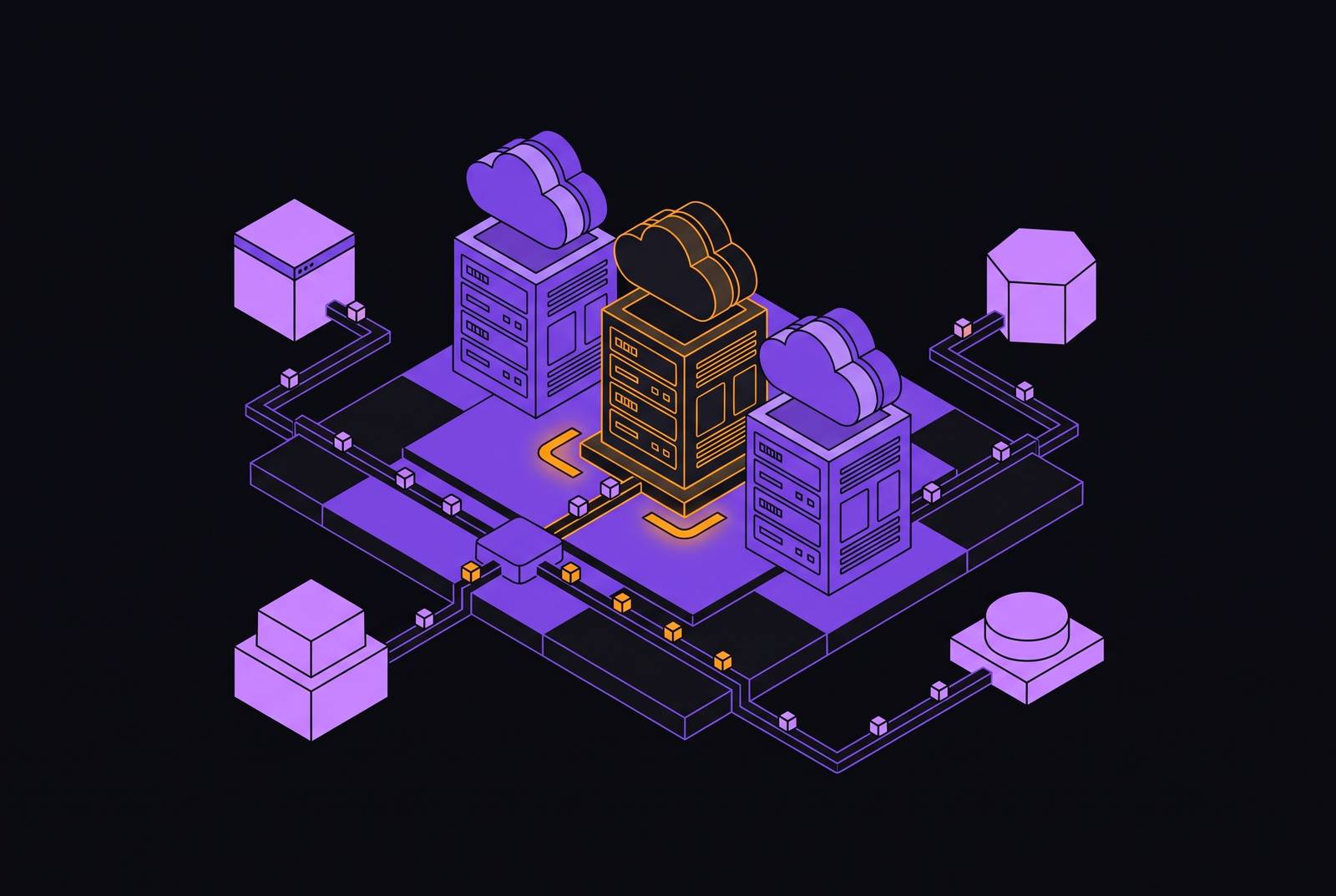
A multi-harness cloud coding agent platform is a coordination layer for running Claude Code, Codex, Cursor, and OpenCode without standardizing on one agent. For teams already using all four, the platform decision turns on environment isolation, workflow integration, and cross-agent observability. The right infrastructure keeps execution separate, returns work through existing review channels, and attributes output and cost to the agent that produced them.
Why teams running all four agents need a platform layer at all
Two agents editing the same file can overwrite each other’s changes while each proceeds without knowing what the other is doing. Separate terminal windows do not provide coordination. Neither does manually staggering execution solve the underlying architecture problem, because each tool still operates in its own context. For teams already committed to multiple coding agents, duplicated work and conflicting changes are therefore platform concerns.
The 2026 stack spans three layers, with an IDE for real-time collaboration, a CLI for local execution, and cloud agents for asynchronous delegation. Those layers serve different kinds of work. The platform makes them coherent for a team by connecting execution to shared task and review workflows. Without that connection, an engineer can delegate work remotely but still inherit the job of reconciling its context, changes, and results with work happening elsewhere.
Supporting all four agents means more than accepting their names in a task menu. A host that accommodates only one execution model reintroduces lock-in through infrastructure. The distinction becomes visible when an agent needs persistent project context, a browser, a particular provider connection, or continuity with an editor workspace. Isolation protects those runs from one another, integration makes their results usable by the team, and observability makes their contribution inspectable.
What each of the four agents actually needs from a host environment
Claude Code is designed for long autonomous tasks, including multi-file backend refactors, architecture-level work, and migrations. Its Projects relaunch on September 17, 2026 introduced parallel cloud threads, each with its own branch and repository copy, coordinated by a central orchestrator that surfaces collisions as merge conflicts. Threads were cloud-only at launch, when local execution was described as “coming very soon”. Local execution subsequently shipped on September 24, 2026. State also extends beyond the repository copy. Shared project memory preserves project details, decisions, and communication-style preferences across threads, so the host must preserve that context reliably.
Parallel execution also changes the resource profile of Claude Code. Anthropic’s announcement flags that parallel threads consume usage limits faster than sequential sessions. A platform must account for fan-out. This requirement ties hosting to cost attribution, because how the runs are set up affects how fast they use up the available usage.
Codex spans the editor, terminal, and cloud, with Slack integration and an SDK in its general-availability offering. Its host requirements therefore include a place to run commands and connections between execution surfaces. Cursor Cloud Agents have a different shape. They run in isolated VMs, use a browser, run software, and return review artifacts, while teammates can share workspaces and prompt agents together. A platform hosting Cursor must keep local editor work and remote tasks linked, with cloud tasks treated as part of that work.
OpenCode is an open-source, model-agnostic terminal agent that connects to a provider or local server for its model. Its bring-your-own-key approach is relevant to teams with data-sovereignty constraints. Provider routing is therefore a hosting requirement. A platform must not force that deployment through a managed API relay that conflicts with those constraints.
These different execution shapes converge on isolated runs, credentials kept separate across providers, and environments capable of verification. Writing files is not sufficient. Most agent sandboxes can run unit tests but cannot deploy to a real environment, which leaves a gap when verification needs APIs, services, or a browser. That gap applies to all four agents and cannot be closed by choosing a stronger model.
Environment isolation: why each agent run needs its own sandboxed VM
A shared environment exposes more than files to interference. One agent’s installed packages, modified environment variables, or cached state can corrupt another agent’s run. The visible conflict may be a changed file, but the cause can sit elsewhere in the environment. Sharing execution space is therefore not simply a cheaper version of isolated hosting. It introduces both reliability risk and security exposure.
Each agent run needs its own sandboxed VM, with filesystem and network isolation working together. Filesystem separation alone leaves agents exposed if one can still reach another agent’s secrets through the network or environment. Credential access needs its own controls. At team scale, the relevant questions include whether sensitive credential paths can be blocked, outbound domains restricted, tool calls audited, and bad changes rolled back. Those controls set limits on what a run can affect as well as where its files are stored.
Within that boundary, the environment must function like a developer machine preloaded with the team’s dependencies. Agents need to install packages, start services, drive a browser, and verify their work. Isolation must not make the environment inert. Starting from a known state makes output reproducible and reviewable rather than dependent on accumulated local state, while a disposable environment can be discarded cleanly after the run. For teams with bring-your-own-cloud or on-premises requirements, the platform must also be able to act as a control plane within their infrastructure.
Separate environments do not eliminate the need to coordinate changes to the same repository. Platform-enforced file reservation sets a different limit: an agent must have a reservation before it can write to a file. Enforcement is the important distinction in this case. Asking models to coordinate leaves the guarantee with the models, which can hallucinate coordination. Enforcing reservations moves that guarantee into the platform.
Workflow integration: how engineers trigger Claude Code or Codex from Slack and get a pull request back
Engineers need to delegate from the tools where tasks already live, including Slack, Linear, GitHub, and GitLab. A separate destination for triggering tasks and reviewing results creates an adoption barrier even when its sandbox works well. IDEs support synchronous pairing, while cloud agents support asynchronous delegation. That difference places the trigger and review surfaces in the team’s existing workflow. Integration is a prerequisite for team-wide use.
Codex has Slack integration that lets teams hand off work and get results back in Slack. A multi-agent platform must support that path and give the other agents the same links to the team’s workflow. The trigger is only half the requirement. To support the complete request-to-review path for Claude Code or Codex, the platform also needs to return a pull request rather than leave engineers to retrieve changes manually. Support for one agent’s Slack workflow does not, by itself, demonstrate that the platform supports the same workflow across all four.
Linear provides a mature delegation surface in 2026. Linear’s MCP server lets Claude Code, Codex, Cursor, and other MCP clients find, create, and update issues, projects, comments, initiatives, milestones, and project updates. Its Loops run recurring agent workflows on a schedule or event. Assignment can also serve as a trigger. Third-party agents such as Cursor can take assigned issues like teammates without consuming a paid seat, connecting delegation to an existing unit of team work.
Results must come back as pull requests, recordings, or structured replies that fit how the team already reviews work. Claude Code Projects handles collisions in a familiar way, because its branch-per-thread setup brings overlapping changes back as ordinary merge conflicts. Review remains within an established quality gate. By contrast, artifacts confined to the agent platform require a separate retrieval or review process. Testing only the sandbox misses what can keep a team from adopting the platform, even if every execution test passes.
Cross-agent observability: attributing every minute of agent work across all four tools
When all four agents operate simultaneously, a record that a run completed is not enough to explain what happened. The team needs to know which agent produced which change, using which model and credential, for which task. Line-level attribution establishes the foundation for code review. Without it, reviewers can inspect a diff but cannot attribute its contents to the agent that produced them.
Cost attribution requires a similarly precise account of agent, harness, model, and credential. A total for all spending cannot show which combination used up the budget or which work was worth the cost. Claude Code’s parallel-thread usage profile makes this distinction concrete. Fan-out can consume usage limits faster, so a useful account must connect that consumption to the tasks and outcomes it supported. Engineering leaders need that connection to decide which agents to scale and which to constrain.
Full observability therefore goes beyond a log of agent runs. It attributes every minute of work down to its source, harness, model, and credential, then presents that information in a form leaders can use. Outcomes must remain part of the record. Opening a pull request is not a sufficient answer to which task an agent completed, at what cost, under whose credentials, and with what result.
This is also what makes a harness-agnostic platform useful as models improve. Running four agents gives the team a dataset it can use to compare them, with data from all four. Flexibility needs evidence to guide its use. If the platform treats all execution as undifferentiated runs, the team retains tool choice but loses the ability to judge those choices.
How to run the evaluation: a structured trial across isolation, integration, and observability
The evaluation should test all three criteria together, with each treated as part of the same trial. Assign the same scoped feature or reproducible bug to each agent from the same repository snapshot. Keep the starting point consistent across all four runs. Verify that dependencies, private packages, databases, and test services work in the task environment, then inspect changes, command output, tests, and browser evidence. Record the human time needed to make each result ready for review, because that work is part of the delivery process.
During the trial, treat the environment as a first-class variable. Confirm that each run has its own sandboxed VM and can install packages, run services, drive a browser, and verify its output. A platform that isolates well but cannot reach the private package registry or run the test suite has failed the trial regardless of benchmark scores. For OpenCode deployments subject to data-sovereignty requirements, evaluate whether the control plane can operate with execution in the team’s own cloud or on-premises infrastructure.
Use the tools where the team normally hands off work and check that results come back in a form the team can review in its normal workflow. Then examine the attribution for every run. The analytics should connect source, harness, model, and credential to time, cost, task, and outcome across all four agents. This combined test exposes platforms that execute work successfully but leave the team to reconstruct how it was requested, produced, or charged.
Checks on costs, terms, and security must cover the plan the team would buy as well as the demo configuration. Check repository permissions, secrets, network access, retention, and deployment requirements against that plan. Pricing deserves the same scrutiny as architecture. A requirement to designate one primary agent, or pricing that effectively penalizes running all four, can recreate lock-in without restricting technical compatibility. A bring-your-own-keys model, where the platform coordinates work and the team supplies agent subscriptions, gives the team a final way to test whether the business model lets it keep its choice of harness.