What a Fully Managed Agent Platform Actually Does When You Invoke Cursor or Claude Code From Linear
Each step from Linear assignment to PR, and where failures start.
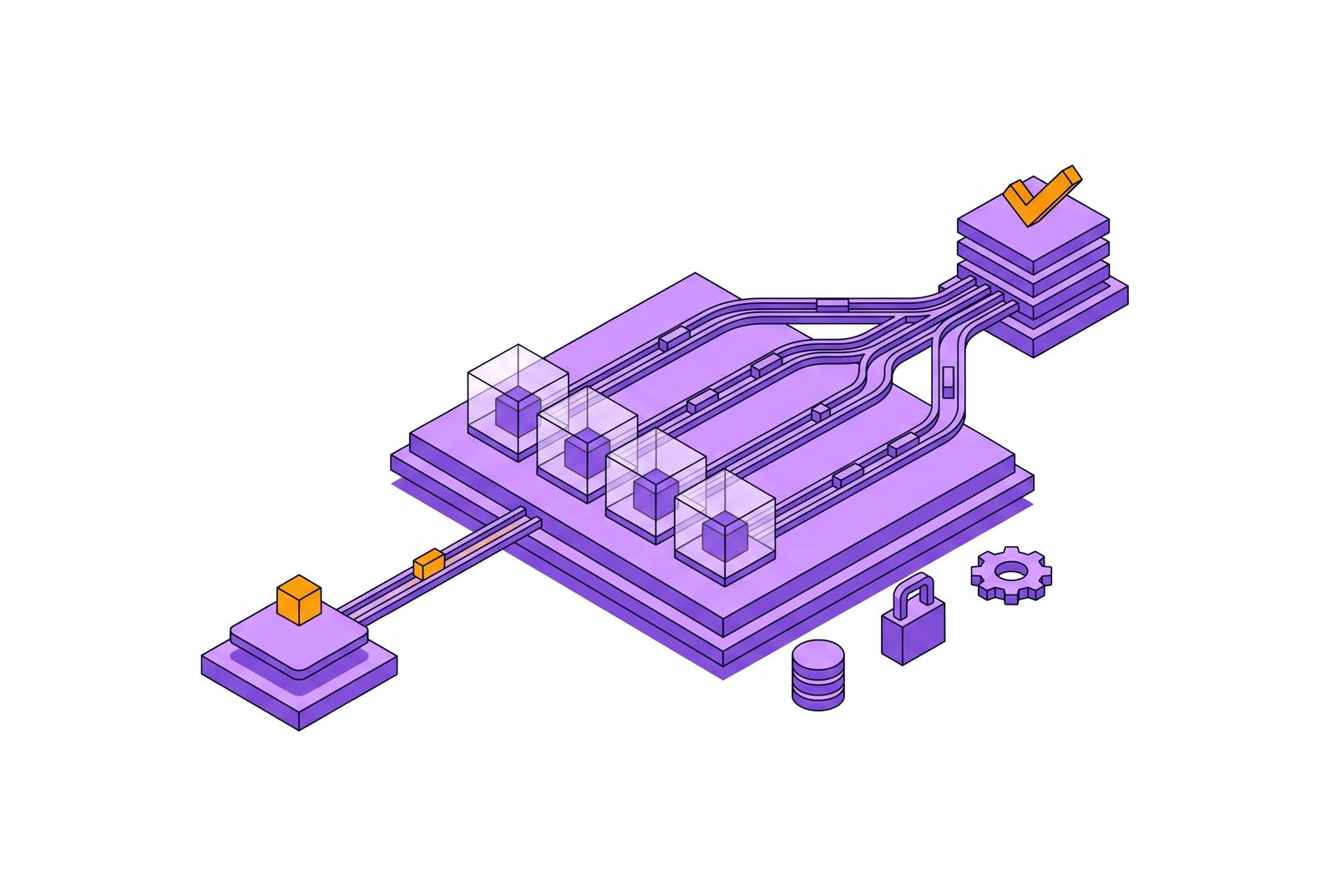
A fully managed, multi-harness cloud coding agent platform turns a Linear assignment or Slack message into an isolated agent run and a pull request the team can review, while the platform manages the execution infrastructure. It handles provisioning, credentials, repository checkout, execution, and delivery for supported harnesses such as Claude Code, Codex, or Cursor. Understanding that sequence lets engineers diagnose failures and preserve human control over what merges.
Why the Linear-to-PR sequence feels like a black box and why that matters
Assigning a ticket takes one gesture, but fulfilling it requires a machine, permissions, code, an agent process, and a delivery path. Unlike a CI pipeline, where individual steps are visible in a log, a managed invocation presents several infrastructure operations as one act of delegation. That compression makes the workflow convenient but can leave teams adopting it on faith.
A successful PR alone does not explain the process. Engineers need to know what happened between assignment and delivery to tell whether a failure came from a credential, the environment, or an unclear instruction. Mechanistic clarity is therefore the entry point to confident adoption, rather than documentation to consult after something breaks.
What “fully managed” means as a platform category, distinct from a raw sandbox
A sandbox API provides a compute primitive. The team still has to build the trigger layer and the parts that handle credential delivery, context loading, and reporting around it. A fully managed platform supplies those layers as part of the workflow, owning the sequence from dispatch through delivery. The engineer supplies the task and makes the review decision, while configuring the access and environment that delegation requires.
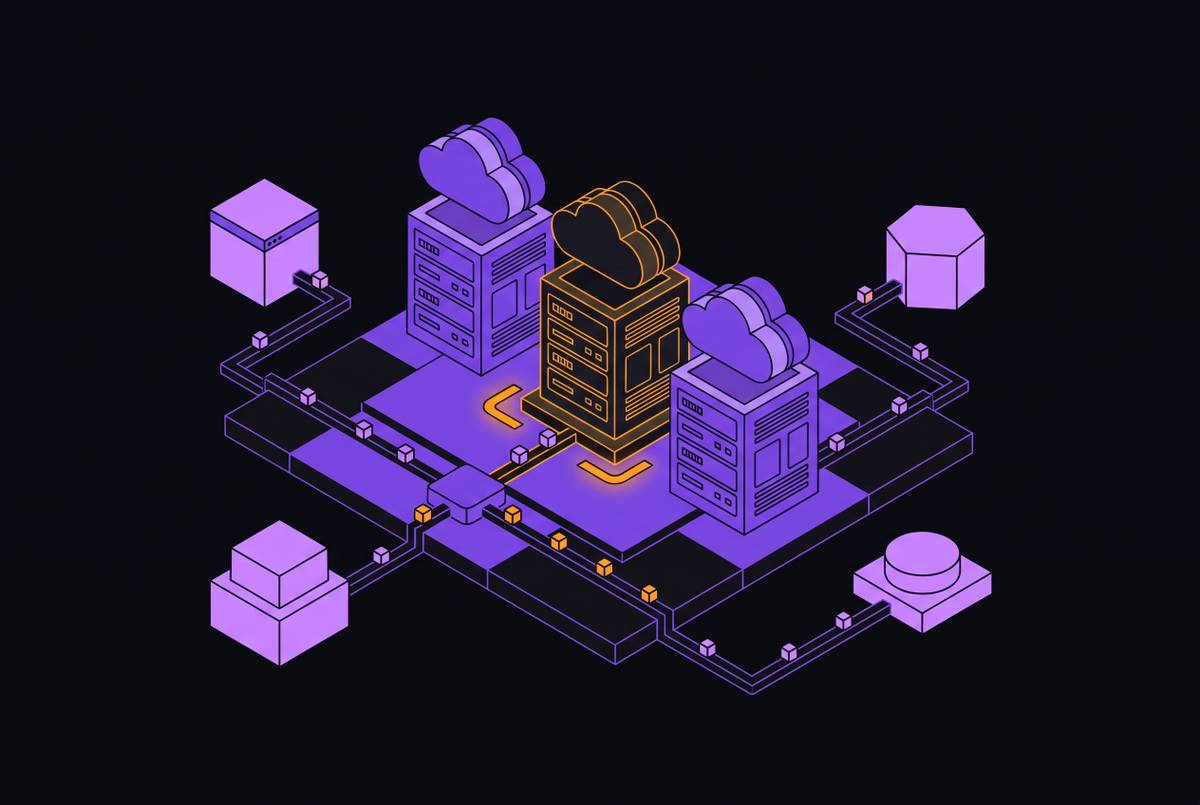
A harness is a different layer again. Claude Code, Codex, or Cursor performs the coding work, while the platform supplies the environment in which that harness runs. In a multi-harness platform, agent selection is decoupled from infrastructure rather than embedded in the trigger or checkout logic. Work starts in an existing team surface, including Linear, Slack, GitHub, GitLab, or a webhook, and ends with a reviewable artifact that someone can assess without watching a running session.
Step 1: The trigger — how a Linear ticket assignment reaches the platform
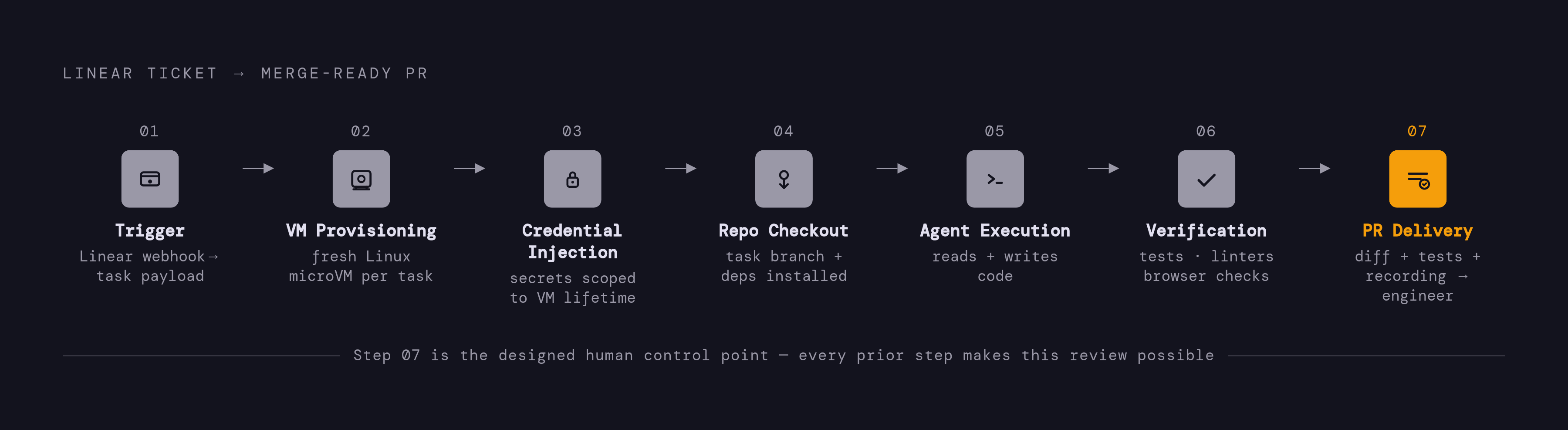
An engineer assigns an issue to an agent or mentions one, and Linear exposes that event through a webhook. The platform receives the event and converts it into a task payload for the infrastructure layer. A Slack message, GitHub or GitLab comment, schedule, or direct API call goes through the same dispatch steps from there.
Linear’s agent platform, as of October 2026, lets teams install agents including Cursor, Codex, and GitHub Copilot, then delegate issues through assignment or @mention. On Business and Enterprise plans, triage rules can also delegate incoming issues automatically. Whether assignment is manual or rule-driven, this stage connects a project-management event to an executable task, rather than requiring the engineer to open a development environment.
Step 2: VM provisioning — what boots, how fast, and why isolation is per-task
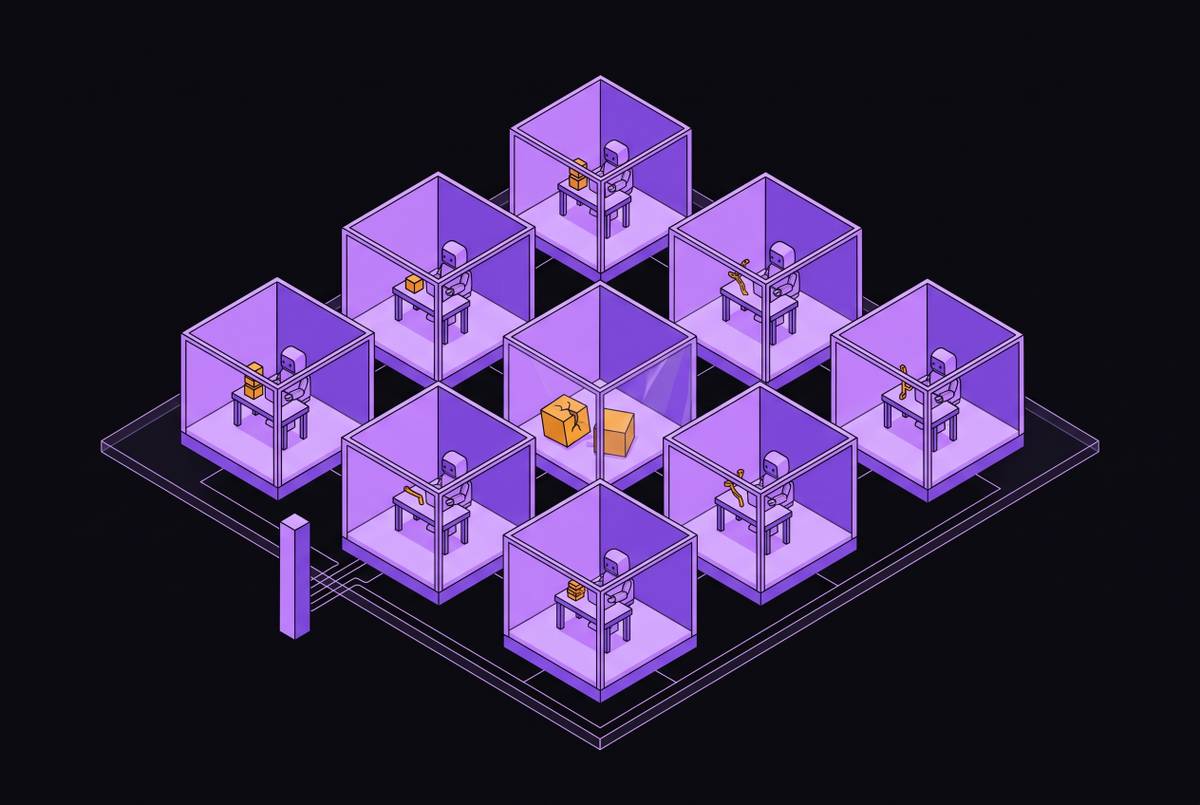
Once the platform receives a valid payload, it boots a fresh Linux microVM dedicated to that task. This is not a shared container or a persistent workspace recycled from an earlier run. The environment has its own kernel, memory, disk, and network, giving the agent room to install dependencies, start the application, and launch a browser. Those operations stay off the engineer’s machine.
Two simultaneous tasks receive separate VMs, without a shared filesystem, process space, or credential scope, so a runaway process in one does not disrupt the other’s environment. The separation provides both a security boundary and an architectural foundation for concurrency. Provisioning must happen before the agent can work, but this sequence establishes no fixed boot-time guarantee. A fresh environment describes the lifecycle of the machine.
Step 3: Credential injection — how secrets reach the agent without being exposed
Before the agent runs commands, the platform injects the credentials needed for the task into the VM’s environment. These can include repository access tokens, package registry credentials, and configured API keys. Their scope is the task and the VM’s lifetime. The engineer defines availability at the workspace or repository level, while the platform handles delivery at boot time without requiring custom injection code.
The important boundary is what the task receives. A frontend task can be denied a production database credential even when that credential exists elsewhere in the workspace. Task-scoped access keeps workspace membership from granting access to everything, but scoping alone does not show how secrets are kept out of harness output or logs.
Bring-your-own-model-key arrangements use the same delivery stage. The team supplies its API keys for Claude Code, Codex, or Cursor, and the platform injects them at task time without holding or reselling model credits. Model access and repository access are separate permissions, though both must be in place before the agent runs.
Step 4: Repository checkout — how the agent gets the codebase it needs
With credentials available, the platform checks out the repository or repositories into the VM’s filesystem. The platform also creates a fresh task branch rather than directing changes at main, making human review part of the workflow from the start. Separate branches keep unmerged edits apart, but conflicts can still arise when the changes are brought together.
When a change spans several services, all the required repositories can be in one environment, so separate agent sessions do not have to work without shared context. This gives the current invocation the code it needs without relying on a previous VM’s filesystem. The dependencies must also be installed, the environment configured, and the required build steps run here, so the agent can start by reading code without having to fix an incomplete setup.
Step 5: Agent execution — what Claude Code, Codex, or Cursor actually does inside the VM
The platform starts the configured harness once the environment is ready, passing the task description as its instruction and the repository as its context. The agent can read and write files, run terminal commands, install packages, start the application, and execute tests. Browser-based checks can also happen inside the VM. The work resembles local agent execution, but it is detached from the engineer’s laptop and its other processes.
Harness choice changes agent behavior while infrastructure ownership stays the same. OpenAI’s Agents API exposes the Codex harness and the infrastructure that powers Codex, with orchestration, tool use, durable sessions, and subagent support. Cursor Cloud Agents run in isolated VMs, can use software and a browser, and return artifacts for review. Cursor’s August 2026 update added event subscriptions so agents can wake on a pull request, a Slack thread, or a cron schedule.
In the multi-harness platform model, switching from Claude Code to Codex for the next task changes the harness selection without requiring a new trigger, credential configuration, or branch strategy.
Step 6: Verification inside the VM — how the agent checks its own work before filing a PR
Code generation does not have to end execution. Before opening a PR, a well-configured agent run includes the checks available in the repository, including tests, linters, the application itself, and sometimes a browser session. The agent can observe a failure, revise the code, and rerun the check within the same isolated environment. That loop turns the VM into a place to write and exercise the change.
Verification still depends on a runnable repository. The platform cannot make up for missing test services, database seeds that are unavailable, or a broken build setup. Those dependencies belong in environment preparation because they determine what the agent can actually check before delivery. When the checks work, the resulting PR offers evidence about the change as well as the diff, allowing the engineer to review the work without auditing the implementation from scratch.
Step 7: PR delivery — what comes back to the engineer and what it contains
The sequence ends with a pull request on the task branch. It includes a readable diff and test output, and in many cases a recording or summary of what the agent did and why. These artifacts let the engineer assess the work without having watched the session. The PR is the designed control point for the autonomous process.
The platform and agent do not make the merge decision. Human review and approval remain the gate, with branch protection and required reviewers in force as they would be for any other PR. Delivery also returns to the originating surface, so the Linear issue receives a comment linking to the result, making a separate dashboard visit unnecessary. Attribution identifies the task, harness, model, credential used, and workspace runtime, giving the team a basis for auditing the run and refining future task scope.
How can a team run multiple coding agents in parallel without managing infrastructure?
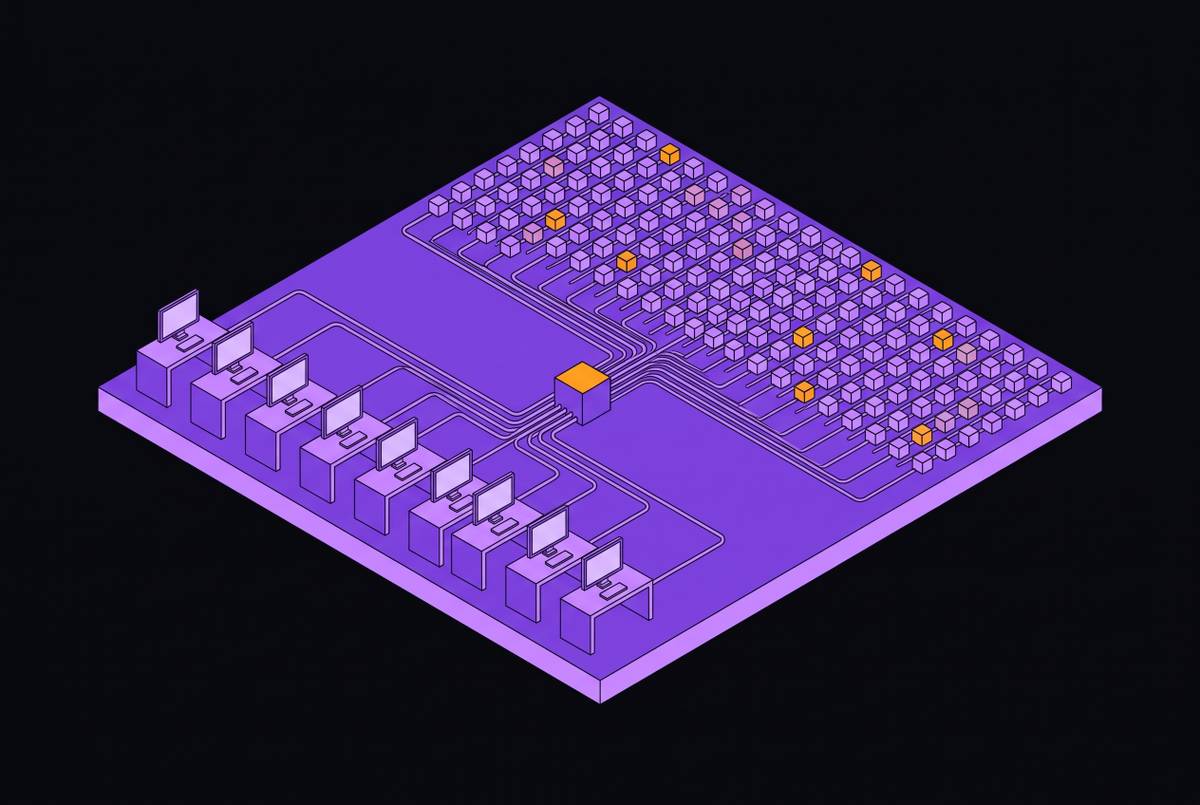
Five tickets assigned at the same time each go through their own run. Each invocation receives its own VM, credential scope, branch, and agent process, then returns its own PR. Because each task runs in isolation, tasks can run in parallel without the team having to put together shared workspaces or manage local processes that compete with one another.
Human review becomes the practical constraint on throughput. An engineer can review changes that agents worked on overnight, but still has to judge each diff before the code ships. Scheduled and event-driven dispatch extends that pattern beyond working hours, with tasks starting from a cron schedule or a webhook associated with a failed CI run, Sentry alert, or dependency update.
Where the sequence can break and what to verify before trusting it in production
A missing PR becomes diagnosable when the intermediate steps are understood. The trigger may not have arrived, credential injection may have failed, checkout may have stopped, or the agent may have been given an unclear task. Each possibility points to a different stage. Treating the whole invocation as one opaque operation obscures those distinctions and encourages repeated runs without correcting the cause.
Credential misconfiguration occurs when a dependency requires authentication that the task has not been granted. The agent may stop or return a change that fails CI, so its command log is important for finding out what went wrong. Environment failures have a different signature. A missing database or seeded fixture can make tests fail for reasons unrelated to the code change, while a vague ticket can lead to work that makes technical sense but does not do what the engineer intended.
Before using the platform in production, a team should check command logs, make sure the environment is ready, and set acceptance criteria. Audit logs, attribution, and workspace recordings connect a result to the actions and permissions behind it. That visibility makes a failed run explainable and gives the team a specific configuration or instruction to fix.
What to configure before the first Linear ticket goes to an agent
Begin with repository access and the merge gate. Configure a credential that can clone the repository and push a task branch. Require reviewers on main and disable auto-merge. These controls make agent changes go through the same human approval that keeps unsuitable human commits from being merged.
Next, scope credentials to the intended work. Configure the necessary secrets at the workspace or repository level, then confirm that the task receives no broader access than it needs. Run the test suite in a clean environment before delegating the first ticket. Remove setup steps that depend on a developer’s remembered manual actions, and document the build and test commands in the repository so the agent can read them.
Choose a first task with clear limits and clear acceptance criteria. A specific lint-rule fix, a dependency upgrade to a known target version, or a test for an existing function provides a more definite target than “refactor the auth module.” Select the harness after those foundations are ready, using an agent the team already knows on a platform that supports interchangeable harnesses. Choosing a different harness later should not mean having to rebuild the credential or trigger configuration.